Why this study matters
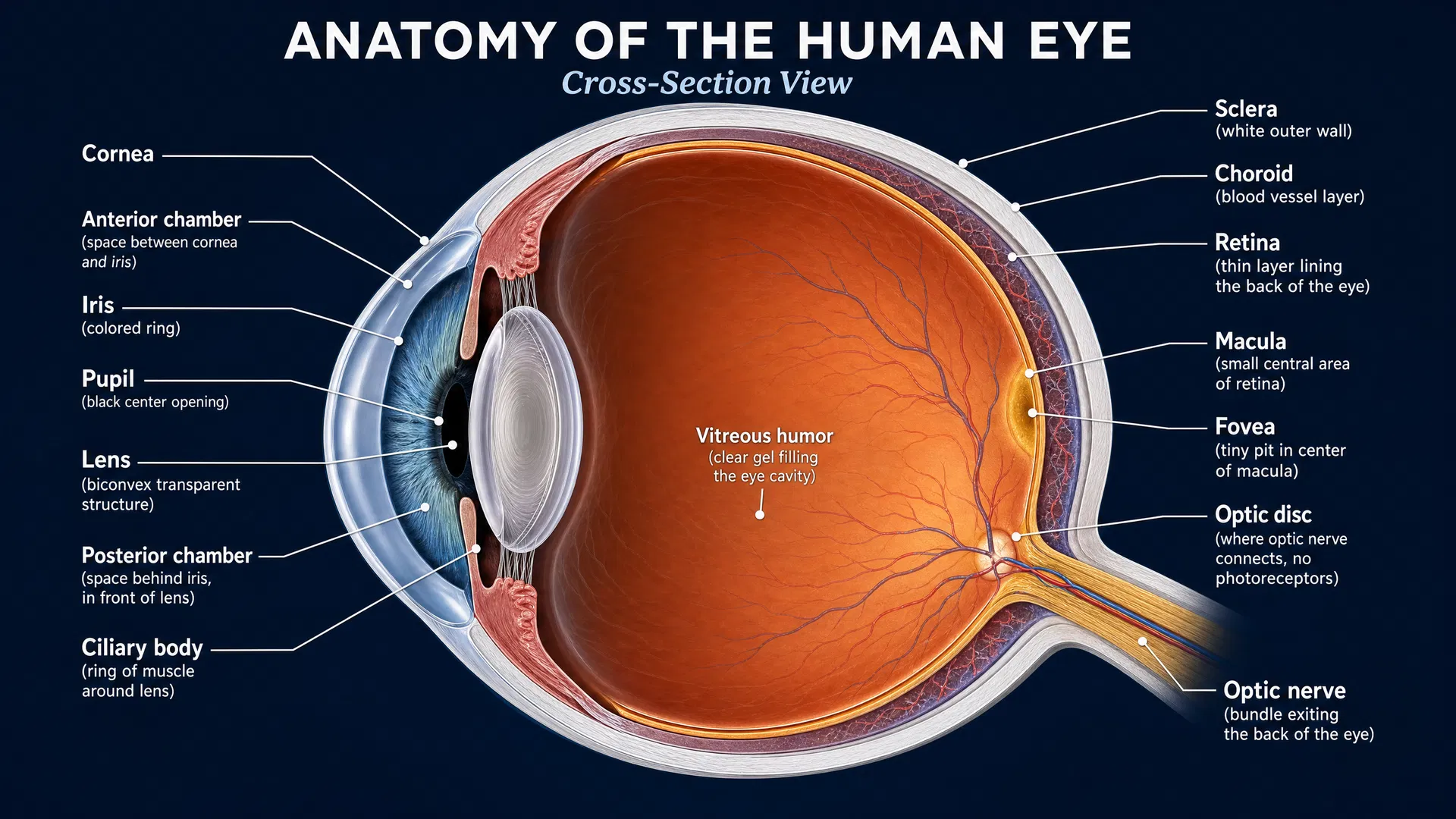
Cone-rod dystrophy (CORD) is an inherited retinal disease in which cone cells—the retinal cells responsible for central, detailed, and color vision—are affected early, followed by progressive involvement of rod cells that support vision in dim light and the visual field. The result can be declining reading vision, light sensitivity, altered color perception, and later difficulty seeing at night or navigating peripheral spaces.
A 2026 study from Brazil offers an important, detailed look at retinal disease caused by changes in CERKL, a gene historically associated in some resources with retinitis pigmentosa. By reviewing a large clinical database and identifying 52 people from 50 unrelated families with molecularly confirmed CERKL-related disease, the researchers found that CORD—not retinitis pigmentosa—was the predominant presentation in this cohort. For patients and families, defining the most likely disease pattern is valuable for genetic counseling, clinical monitoring, and preparation for future gene-targeted research.
A predominantly cone-rod disease pattern
The researchers retrospectively reviewed 2,841 records from patients with inherited retinal dystrophy seen at Instituto de Genética Ocular in Brazil between January 2006 and July 2025. They selected 52 individuals with disease-causing CERKL findings.
Fifty of the 52 participants had a cone-rod dystrophy phenotype. Only two had macular dystrophy, a condition centered primarily on the macula, the small retinal region needed for sharp straight-ahead vision. This strong pattern led the authors to propose that CERKL-related inherited retinal dystrophy should be considered principally a CORD phenotype, consistent with previous evidence in the literature.
Symptoms began across a wide age range, from 7 to 40 years old. This variability is a key message for families: the same disease gene can lead to symptoms in childhood for some people and not become apparent until adulthood for others. Even so, the overall pattern described by the study was early presentation accompanied by a rapid reduction in visual acuity.
At the first clinic visit, best-corrected visual acuity ranged from 20/25—near normal central vision—to light perception only. In logMAR measurements, this corresponded to values from 0.1 to 2.7. Such a broad range reflects both the differences in age at symptom onset and the fact that people reached specialty care at different points in their disease course.
A common CERKL variant in this Brazilian cohort
The team identified 24 distinct CERKL variants. The most frequent was c.847C>T, a nonsense variant in exon 6 that is described as p.Arg283. A nonsense variant introduces a premature stop signal into the genetic code, which can prevent production of a full-length functional protein.
This variant was found in 24 of the 52 individuals in two copies (homozygous) and in 12 individuals alongside a different CERKL variant (compound heterozygous). This concentration of one variant is clinically meaningful. It may help laboratories and clinicians recognize an important recurring cause of CORD among Brazilian patients and families with relevant ancestry, while also demonstrating the value of comprehensive genetic testing because many other CERKL variants were present.
Evidence for a measurable course in complete loss of function
One of the study’s most useful findings involved 37 patients with two “double-null” CERKL alleles. In this context, double-null refers to genetic results expected to cause complete loss of CERKL function.
Among these individuals, longer disease duration was significantly associated with worse visual acuity in both eyes. The reported Pearson R² values were 0.315 for right-eye acuity and 0.405 for left-eye acuity. Put simply, disease duration explained a meaningful portion of the differences in visual acuity observed across this group. The authors interpreted this relationship as evidence of a consistent and relatively predictable decline in vision over time when CERKL function is completely lost.
This does not mean every person will follow an identical path. However, identifying a measurable relationship between time since disease onset and vision loss strengthens understanding of the natural history of CERKL-related CORD.
What the findings could mean for treatment development
No CERKL-specific treatment was evaluated in this retrospective study. Its contribution is instead foundational: it clarifies which patients may be appropriate for future studies and provides real-world information about disease progression.
For emerging gene-based approaches, the genetic diagnosis is central. Treatments designed to address a specific gene require confidence that the gene is responsible for the retinal disease. The study also highlights why identifying whether a person has two predicted loss-of-function variants may be important when designing clinical studies, since this subgroup showed a significant relationship between disease duration and visual acuity decline.
Natural-history data can help researchers choose outcomes for future trials. If visual acuity changes predictably over time in some groups, it may be a useful measure alongside other assessments of central retinal function and disease progression. Earlier identification may also become increasingly important as therapies aim to preserve remaining retinal cells rather than restore cells already lost.
Looking ahead
This Brazilian cohort expands the evidence that CERKL-related disease is most often cone-rod dystrophy, with symptoms that may begin in childhood or adulthood and can progress rapidly. It also identifies a frequent CERKL variant within this population and provides evidence for a time-linked decline in visual acuity among people with complete predicted loss of gene function.
As genetic testing becomes more integrated into inherited retinal disease care, studies such as this one turn a gene name into practical knowledge about likely symptoms, progression, and research priorities. Larger studies across diverse populations, with long-term follow-up, will be important for refining these genotype-phenotype connections and preparing the field for future CERKL-directed therapies.