
Why this review matters
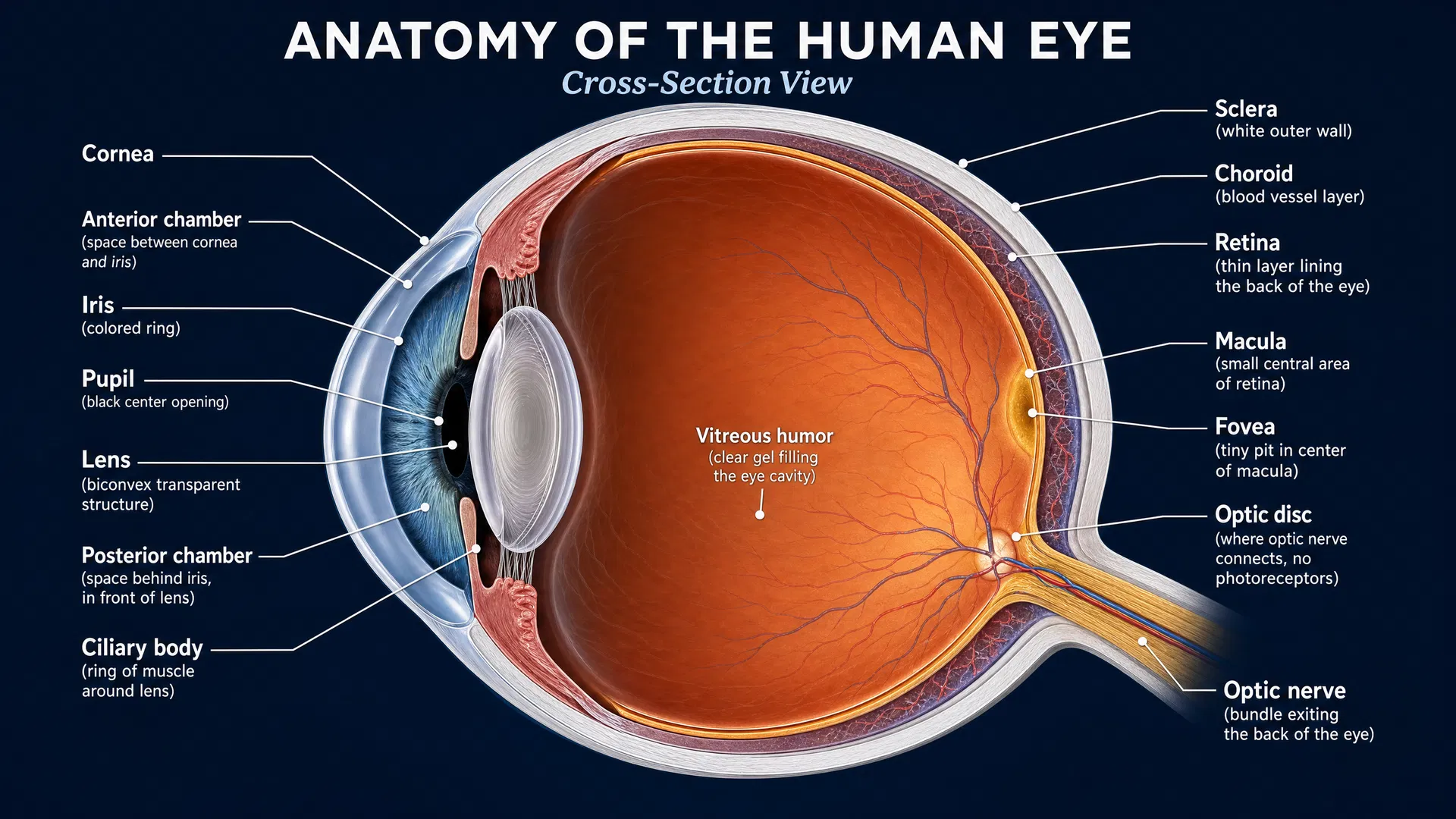
Stargardt disease type 1 (STGD1) is the most common inherited macular dystrophy, affecting the macula—the central part of the retina responsible for detailed vision. For people and families living with Stargardt disease, research progress can feel especially important because vision changes may be gradual, variable, and deeply disruptive to everyday tasks such as reading, recognizing faces, and navigating visually demanding environments.
A 2026 review in Die Ophthalmologie brings together current knowledge of the genetics and biology of STGD1, along with potential lifestyle approaches and pharmacological strategies under investigation. Its central message is both realistic and encouraging: there is not yet an approved treatment that corrects the underlying cause of STGD1, but a clearer understanding of the disease is creating multiple potential routes toward disease-modifying therapies.
The genetic starting point: ABCA4
STGD1 is caused by disease-causing variants in both copies of the ABCA4 gene. This is often described as biallelic inheritance: a person has inherited or developed relevant variants affecting each copy of the gene.
The ABCA4 gene provides instructions for a protein involved in transporting retinoid-related molecules within photoreceptors. Photoreceptors are the light-sensing cells of the retina. They continually process vitamin A–derived compounds as part of the visual cycle, the series of chemical steps that allows vision to function and recover after exposure to light.
When ABCA4 function is impaired, this transport and clearance system does not work normally. The result is not simply a single missing step. Instead, disrupted clearance can set off a chain of damaging changes that gradually affects the retinal pigment epithelium (RPE) and photoreceptors—the cell layers essential to retinal health and vision.
How impaired retinoid clearance can damage the retina
The review highlights lipofuscin accumulation as a central feature of the disease process. Lipofuscin is material that can build up in the RPE when retinoid-related byproducts are not cleared effectively. In STGD1, this accumulation is linked to several harmful downstream effects.
First, lipofuscin can contribute to oxidative stress. Oxidative stress occurs when damaging reactive molecules outweigh the cell’s protective capacity. The RPE is especially important because it supports photoreceptors, helping maintain the retinal environment and processing material shed by these light-sensing cells.
Second, the review identifies complement activation as part of the disease biology. The complement system is a component of the immune system. While it can serve protective roles, inappropriate or persistent activation in the retina may contribute to inflammation-related damage.
Together, oxidative stress, complement activation, and lipofuscin buildup are associated with progressive degeneration of the RPE and photoreceptors. This model helps explain why STGD1 is not only a genetic condition but also a disorder involving interconnected metabolic, cellular, and inflammatory processes.
Why multiple treatment strategies are being explored
Because STGD1 involves several stages of disease biology, researchers are pursuing approaches that target different points in and around the visual cycle. The review describes promising pharmacological strategies in both preclinical and clinical development.
This broad approach is important. A treatment might aim to reduce the formation or accumulation of damaging retinal byproducts, alter metabolic steps connected with the visual cycle, or address downstream processes such as oxidative stress or complement activity. These strategies do not all work in the same way, and they may not ultimately be suitable for every person or every stage of disease. However, studying several mechanisms increases the chances of identifying interventions that can slow retinal damage.
The article also discusses potential lifestyle interventions. This reflects growing interest in factors that may influence retinal stress and disease management alongside specialized medical care. The review places these interventions within the broader context of STGD1 biology rather than presenting them as a replacement for therapies designed to modify the disease process.
What this means for patients and families today
One of the most practical conclusions from the review is the importance of early diagnosis and referral to specialized centers. Establishing an accurate diagnosis and identifying ABCA4 variants can clarify whether a person has STGD1, support family counseling, and help connect individuals with expertise in inherited retinal diseases.
Specialized centers are also important as research advances. They can provide detailed retinal assessment, genetic evaluation, and information about research opportunities as appropriate. Because emerging therapies are targeting distinct biological pathways, careful diagnosis and disease characterization may become increasingly relevant to future treatment decisions.
A research landscape moving toward disease modification
The path from laboratory insight to an approved therapy is rarely simple, but the field has moved beyond a limited understanding of Stargardt disease as an unexplained retinal degeneration. Researchers now have a clearer model: biallelic ABCA4 variants disrupt retinoid transport, impaired clearance promotes lipofuscin accumulation, and this contributes to oxidative stress, complement activation, and progressive loss of retinal cells.
That expanding knowledge is opening several therapeutic possibilities at once. Although no approved causal treatment is currently available, the combination of genetic insight, improved understanding of the visual cycle, and pharmacological programs in development provides a strong foundation for progress. For the Stargardt community, early recognition, specialist referral, and continued research participation will remain central as these promising strategies move closer to potential clinical use.