
Why this matters for people with LCA
Leber congenital amaurosis (LCA) is a group of inherited retinal disorders that causes severe vision loss beginning early in life. For families affected by LCA type 10 (LCA10), which is associated with changes in the CEP290 gene, the development of CRISPR-Cas9 treatment has been especially closely watched. Unlike therapies that add a working gene copy, CRISPR-based approaches aim to make a targeted change directly in DNA.
A 2026 review in Frontiers in Genome Editing examines how CRISPR-Cas9 is moving from laboratory research into human studies across cancer and inherited genetic disorders. Its discussion of LCA10 is important: it identifies retinal CRISPR editing as one of the clinical settings in which meaningful improvements in measures of visual function have been observed in some treated participants. At the same time, the review emphasizes that translating gene editing into safe, durable treatments remains a complex scientific and clinical challenge.
CRISPR-Cas9 in plain language
CRISPR-Cas9 was adapted from a bacterial immune system. It uses two main components: a guide RNA and the Cas9 enzyme. The guide RNA is designed to recognize a selected DNA sequence through normal DNA base-pairing rules. Cas9 then acts as a molecular cutting tool at that location.
This programmability is a major reason CRISPR has changed genome-editing research. Earlier genome-editing methods often required researchers to engineer a new DNA-binding protein for each target. With CRISPR-Cas9, changing the guide RNA can redirect the system to a different genomic site.
For inherited disorders, this creates the possibility of addressing disease-causing genetic changes at their source. However, “programmable” does not mean simple. The treatment must reach the right cells, edit the intended DNA sequence effectively, avoid harmful unintended changes, and produce a clinical benefit that lasts.
What the review reports for CEP290-associated LCA10
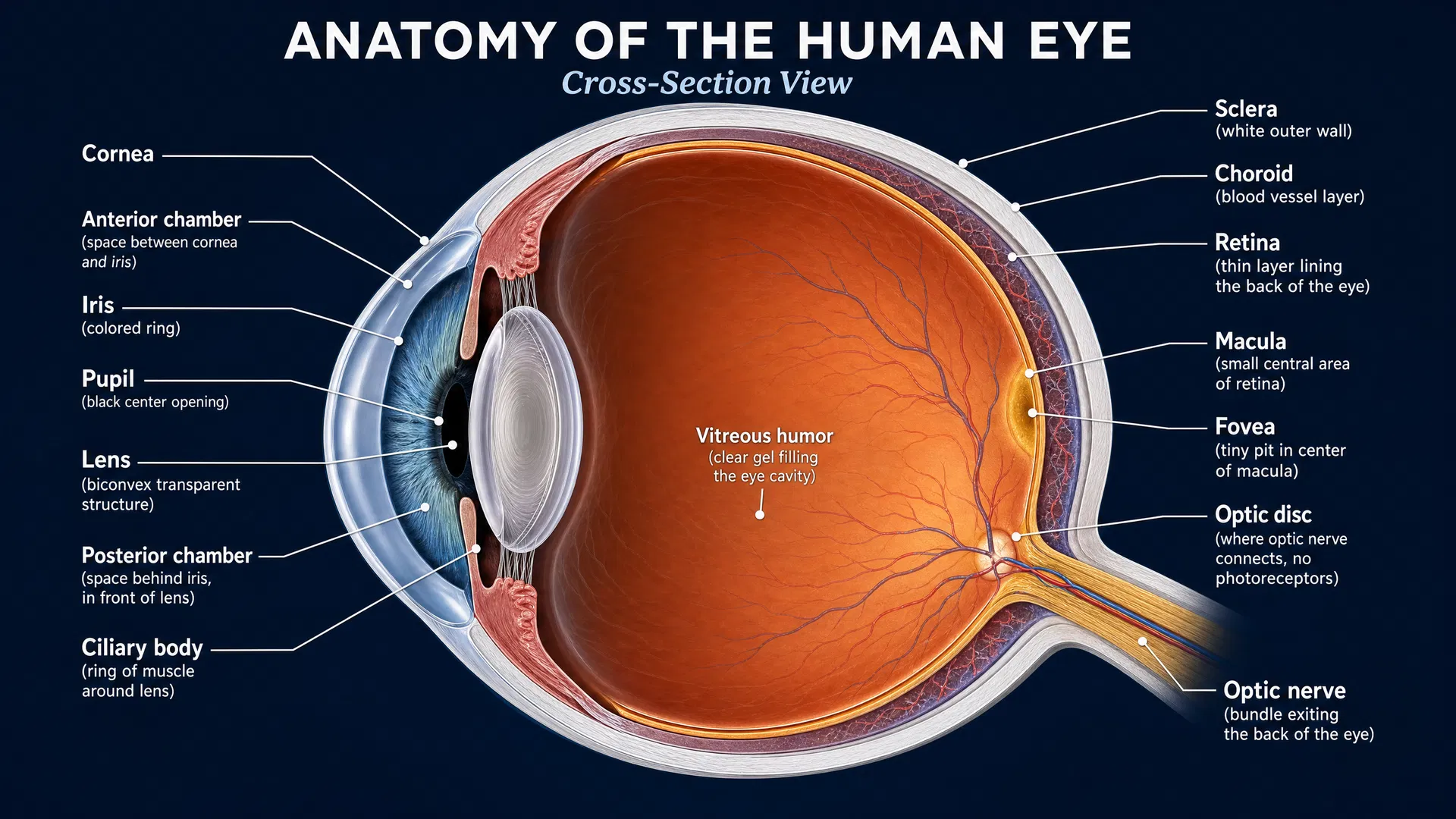
The review describes clinical use of CRISPR editing delivered beneath the retina using an adeno-associated virus (AAV) vector in people with CEP290-associated LCA10. Subretinal delivery places treatment close to retinal cells, including the light-sensing cells and supporting tissues involved in vision.
According to the review, a subset of treated patients showed clinically meaningful improvements in selected measures of visual function. This is an important signal for the field. It indicates that direct gene editing in the eye can reach the clinic and may produce functional changes for some people with this specific form of LCA.
The wording is also important. The reported improvements occurred in a subset of patients and in selected visual-function measures; the review does not suggest that every participant experienced the same result. Such variation is expected to be a central question in future research. Investigators need to understand which factors influence response, including the biology of the condition, the retinal cells that can be reached, and the performance of the editing and delivery system.
LCA10 in the wider CRISPR translation story
The review places LCA10 alongside other important examples of clinical CRISPR translation. In blood disorders, ex vivo editing of the BCL11A enhancer has reactivated fetal hemoglobin. Most evaluable people with sickle cell disease remained free from severe vaso-occlusive crises during the prespecified period, while most evaluable participants with transfusion-dependent beta-thalassemia achieved sustained transfusion independence.
In transthyretin amyloidosis, in vivo CRISPR treatment delivered by lipid nanoparticles has reduced circulating transthyretin protein levels. Researchers have also explored CRISPR-engineered T cells in cancer, with the goal of improving anti-tumor activity, persistence, or resistance to inhibitory signals.
Together, these examples show that CRISPR is not one treatment but a platform. The editing strategy, delivery method, target tissue, and desired biological effect differ substantially between blood, liver, cancer, and retinal disease. For LCA10, the eye offers a localized treatment site and the ability to deliver therapy subretinally, but successful treatment still depends on safe and effective editing within the relevant retinal cells.
Safety and delivery remain central challenges
The review highlights several hurdles that are directly relevant to future retinal editing. One concern is off-target editing, in which DNA changes occur at unintended locations. Another is the possibility of large-scale chromosomal rearrangements associated with DNA cutting. These risks must be evaluated carefully for each CRISPR product.
Immune responses may also affect treatment. Cas9 enzymes originate from bacteria, and the body may recognize them as foreign. Immune reactions to viral delivery vectors, including AAV, may likewise influence the effectiveness or durability of a therapy.
More broadly, getting gene-editing tools to the intended tissue remains difficult. The review notes particular barriers for tissues outside the liver, such as skeletal muscle and the central nervous system. Retinal therapies have their own delivery requirements, reinforcing why advances in editing technology and delivery approaches need to progress together.
Looking ahead
The clinical findings in CEP290-associated LCA10 provide an encouraging milestone: CRISPR editing has moved beyond a theoretical possibility for inherited retinal disease and into patient studies with functional signals in some participants. Yet this remains an emerging area of treatment research, not a one-size-fits-all solution for LCA.
The review also points to newer approaches, including base editing and prime editing. These technologies may avoid some risks linked to the double-strand DNA breaks made by standard CRISPR-Cas9. But they bring their own editing, delivery, and genetic-safety questions and require careful product-specific evaluation.
For the LCA community, the path forward will depend on rigorous clinical research that measures visual outcomes, evaluates safety over time, and clarifies who may benefit most. The progress described in this review shows both the promise of precision gene editing and the careful work still needed to turn that promise into broadly effective retinal treatments.