
Why We Move Fast: The Medicine Behind A Race Against Blindness's Urgency
Stories of Hope
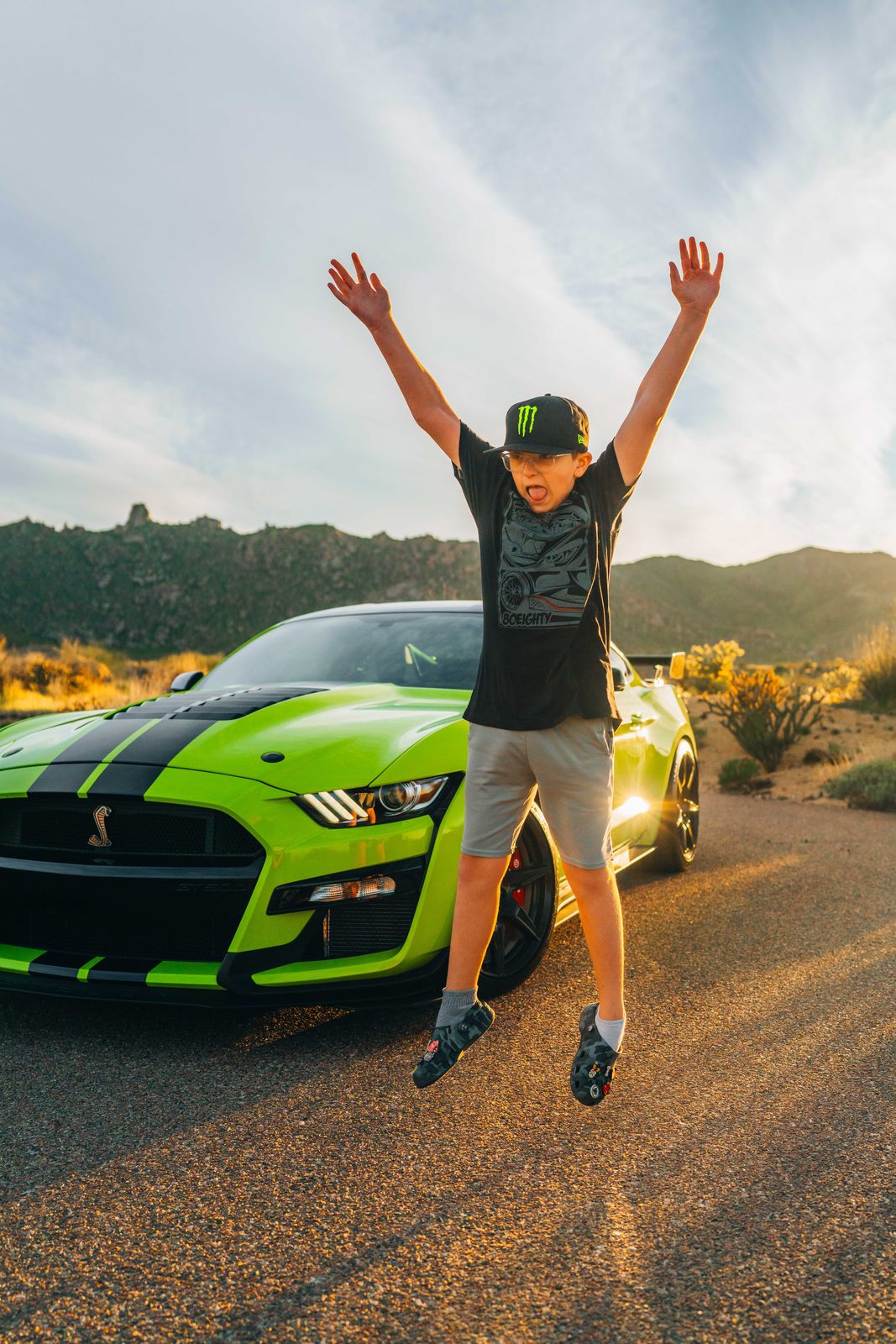
A Race Against Blindness runs fundraisers back to back, pays grants within weeks of deciding them, and talks about time constantly, because the diseases we fund are degenerative: the retina's light-sensing cells die progressively and do not grow back, and a gene therapy can only protect the cells that are still alive when it is given. Urgency is not a fundraising tactic for us. It is the biology of the thing we are racing. As a physician and as Luke's father, here is the medicine behind it.
What happens to the retina in an inherited retinal disease?
The retina is a thin layer of nerve tissue at the back of the eye. Its photoreceptors, the rods and cones, convert light into the signals the brain reads as sight. In an inherited retinal disease, a mutation in one gene means a photoreceptor cannot make a protein it needs, and over time the cell fails and dies. In retinitis pigmentosa, the pattern seen in Bardet-Biedl syndrome, the rods go first, so night vision and peripheral vision fade through childhood; the cones follow, narrowing the field to a tunnel and then taking central vision. There are more than fifty of these diseases and well over a hundred genes behind them, and the detail differs, but the arc is the same: progressive, irreversible, and in the forms we fund, beginning in childhood.
A dead photoreceptor is gone. There is no approved way to regenerate one. That single fact drives everything else on this page.
Why does timing matter for gene therapy?
A gene therapy like AXV-101, the BBS1 therapy our grants carried into a clinical trial, works by delivering a working copy of the faulty gene into the surviving photoreceptors so they can make the protein they were missing. It can stabilize cells that are alive. It cannot revive cells that have died. The therapy is delivered by a single injection into one eye, and the amount of vision it can preserve is bounded by the amount of retina still functioning on the day of the injection.
That is why the AXIS trial enrolls children aged 4 to 17 rather than adults, and why every month between a funded trial and an unfunded one is a month in which the children who might enter it have fewer cells left to save. When the AXV-101 trial had its regulatory clearance in late 2025 but could not start for want of funding, the delay was measured in retinal cells, not calendar pages. Our $1.1 million grant in December 2025, announced in January 2026, closed that gap. The trial exists today, approved by the MHRA and registered as NCT07269665, because the money arrived while there was still something to protect.
What does "fast" mean in practice?
It means we do not hold a gala in the spring and write a check in the fall. We run two or three sweepstakes fundraisers at a time, each with its own Official Rules and its own independent drawing, and we pay grants as the funds exist: $1 million in October 2024, $2 million that December, $1 million in September 2025, $1.1 million in December 2025 (announced January 2026), $1 million in June 2026, and a second $1 million to Foundation Fighting Blindness in November 2026 ($700,000 to the Gund Vision Fund (formerly the RD Fund), matched dollar for dollar by the Gordon and Llura Gund Foundation Challenge to $1.4 million, and $300,000 to Dr. Jin Woo Kim at KAIST for preclinical research on regenerating light-sensing cells from the retina's own Müller glia). Seven point one million dollars, all of it paid, in the two years since our first grant.
It also means we fund the step that is blocking a therapy rather than the one that is interesting. Manufacturing and safety studies are not glamorous; they were what stood between AXV-101 and a trial in 2024, so that is what the $2 million bought. Our Research Grants Program, opened in August 2026, is built around the same question: what is the next thing standing between a therapy and a child, and what would it cost to remove it?
What "fast" never means
It never means a shortcut in how the money is raised. Every fundraiser has a free mail-in entry, a published set of Official Rules, a drawing conducted by an independent administrator, and a winner announced live and listed publicly. Our filings are public and our reviews are on a platform we cannot edit. We move quickly on the science because the disease does; we move by the book on everything else because trust is the only thing that lets us keep moving at all.
For families who just got the diagnosis
If you have just been told your child has an inherited retinal disease, the clock on this page is yours too, and the most useful thing you can do with it is get a genetic diagnosis, because every therapy in development is tied to a gene. Our free IRD Education Hub has a guide for the newly diagnosed, a genetic-testing guide, a clinical-trial tracker and a directory of specialists. Read it, then talk to your retina specialist; nothing here replaces that conversation.
Frequently asked questions
Why is A Race Against Blindness always fundraising?
Because inherited retinal diseases destroy photoreceptors progressively and irreversibly, and gene therapy can only protect cells that are still alive. Funding that arrives a year later reaches children with less vision to save.
Can gene therapy restore lost vision?
No. Current gene therapies deliver a working gene to surviving photoreceptors to stabilize them. They cannot regenerate cells that have died, which is why early treatment matters.
Why does the AXV-101 trial enroll children?
Because BBS1-related retinal degeneration begins in childhood and the therapy's benefit depends on how much retina is still functioning. The AXIS trial enrolls ages 4 to 17.
Does moving fast mean cutting corners?
No. Every fundraiser keeps the same safeguards: free entry, published rules, an independent drawing and a public winner. Speed applies to funding the science, not to how the money is raised.
No purchase or donation necessary. Void where prohibited. See Official Rules for details.