What the study examined
A cross-sectional study of people with chronic Leber hereditary optic neuropathy (LHON) in Sweden found that participants whose vision loss began before age 15 had, on average, better preserved visual function and macular retinal structure than those whose onset occurred later.
LHON is a mitochondrial condition that affects retinal ganglion cells and can cause central vision loss. The researchers focused on the chronic stage—eyes affected for at least one year—to examine whether age at first-eye onset was associated with long-term differences in visual testing and retinal imaging.
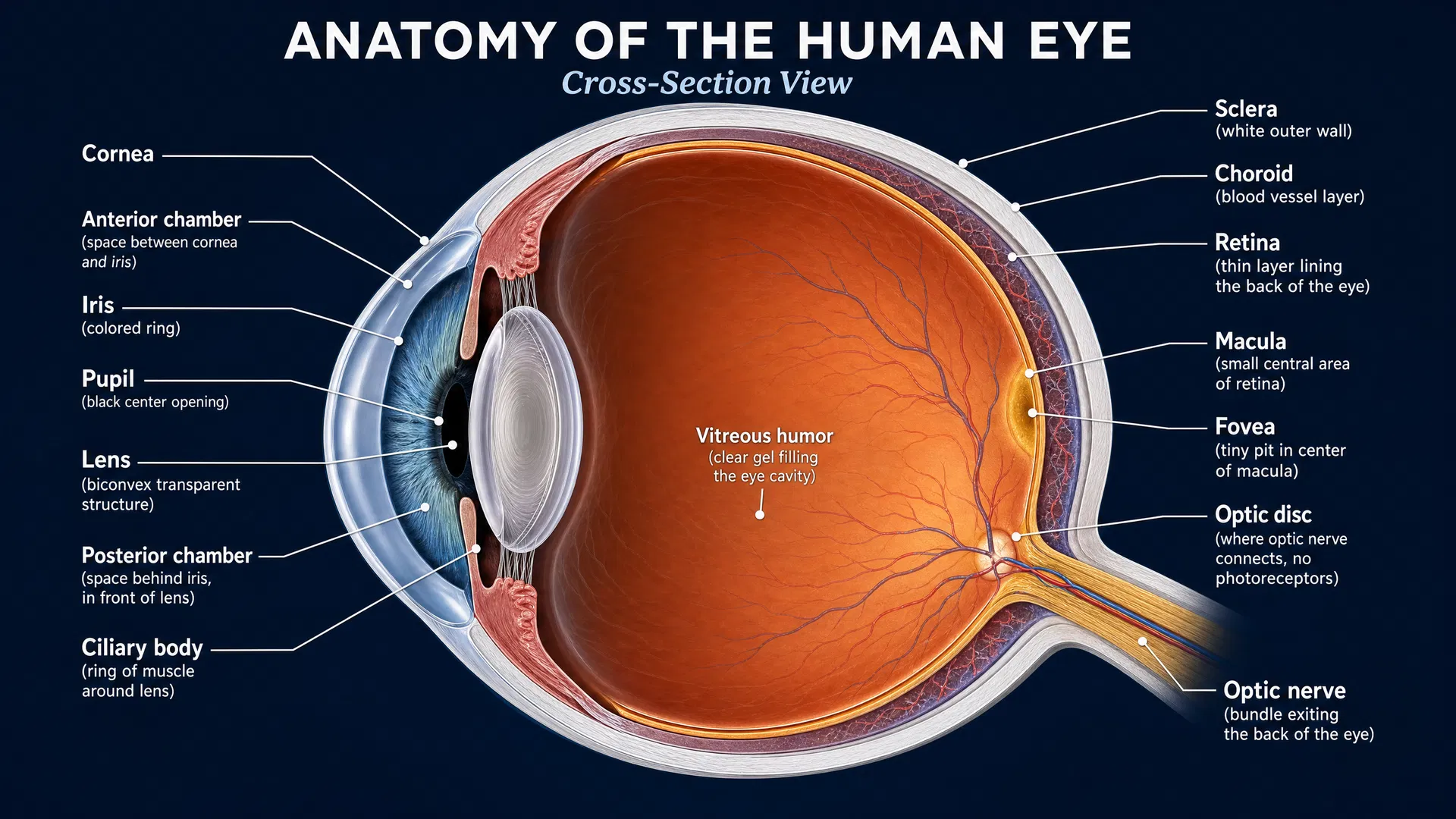
The study enrolled 31 people from the Swedish LHON registry and analyzed 59 eyes. Participants were grouped by onset before age 15, from age 15 through 35, or after age 35. Assessments included visual acuity, visual-field testing, optical coherence tomography (OCT) measurements of the macular ganglion cell complex (GCC), and fundus photographs. The researchers also qualitatively graded retinal vessel tortuosity, meaning how twisted the vessels appeared.
Key findings
The youngest-onset group had better average results across several measures in the chronic phase. Compared with the two later-onset groups, the group with onset before age 15 had:
- Better average visual acuity;
- Higher visual-field scores; and
- Greater average GCC thickness on OCT.
Six eyes in the full study had no or only mild visual impairment. Four of those eyes belonged to people whose LHON began before age 15.
Among participants whose onset occurred between ages 15 and 35, thicker GCC measurements were associated with better visual function. This finding links a structural OCT measure with visual test results in that age-at-onset group, but the study does not establish that GCC thickness causes better vision or predicts an individual person’s outcome.
Moderate-to-severe retinal vessel tortuosity was reported more often in the youngest-onset group. Because vessel tortuosity was graded qualitatively and the study was relatively small, the finding should be interpreted cautiously.
Idebenone findings require caution
Registry data showed that 68% of participants had received idebenone, and 68% of treated participants began it within six months of onset. The authors reported no statistically significant differences in the measured outcomes between participants with and without an idebenone treatment history.
This was not a randomized treatment trial. Differences in who received treatment, when treatment began, disease severity, mutation type, and other factors may affect comparisons between treated and untreated groups. Therefore, these results cannot determine whether idebenone does or does not benefit an individual with LHON.
Why this may matter
The report adds evidence that age at LHON onset may be associated with differences in chronic-stage retinal preservation and visual function. For clinicians and researchers, the findings also support the value of combining OCT-based structural measurements with visual-function testing when studying LHON.
For affected individuals and families, the findings describe patterns seen in this specific cohort rather than a forecast for any one person. LHON can vary across individuals, and this study does not explain why younger onset was associated with better average outcomes.
Important limitations
The study included only 31 participants from a Swedish registry, with 59 eyes available for analysis. It was cross-sectional, meaning it measured participants at one point in the chronic stage rather than following changes over time. The design cannot show cause and effect, evaluate recovery trajectories, or reliably compare treatment effects. In addition, the vessel-tortuosity assessment was qualitative, and the results may not apply to all LHON populations or genetic backgrounds.