Why this publication matters
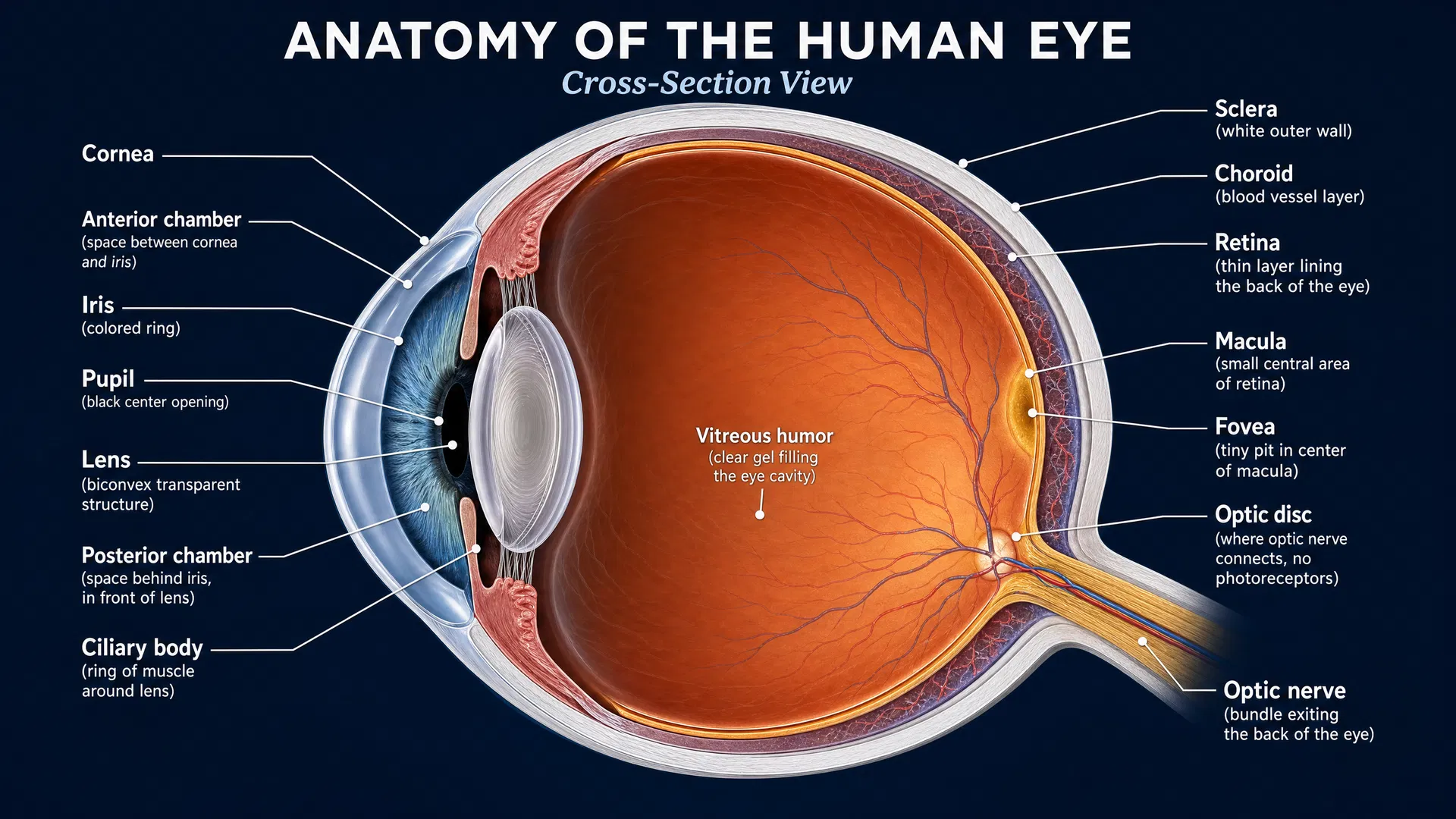
Stargardt disease is the most common inherited, autosomal-recessive macular degeneration beginning in childhood or adolescence. It is caused by disease-causing variants in both copies of the ABCA4 gene. Although Stargardt disease often primarily affects the macula—the central part of the retina responsible for detailed vision—the ABCA4 disease spectrum can be broad. In some people, retinal degeneration extends beyond the macula and may develop into a more generalized rod-cone dystrophy, affecting night vision, peripheral vision, and central vision.
For patients and families, this range of disease severity is important. A treatment designed for a person whose disease is limited to the macula may not be the best fit for someone with widespread rod and cone involvement. The 2026 publication in Die Ophthalmologie outlines a growing set of genetic and non-genetic strategies intended to meet this challenge. While no disease-modifying treatment has yet been approved for Stargardt disease, the field is moving toward therapies tailored to both an individual’s genetic findings and their retinal phenotype.
The central challenge: ABCA4 is a large gene
Gene therapy often uses adeno-associated virus, or AAV, as a delivery vehicle. AAV vectors can transport genetic material into retinal cells, but they have limited carrying capacity. The ABCA4 gene is too large to fit comfortably into a conventional single AAV vector.
This practical obstacle has driven the development of alternative approaches. Rather than relying on one standard delivery method, researchers are exploring several ways to restore or preserve retinal function. These strategies differ in whether they add a healthy gene, repair a specific genetic change, alter disease-related pathways, or bypass damaged photoreceptors altogether.
Gene supplementation: delivering a working ABCA4 copy
One approach is gene supplementation, which aims to provide target retinal cells with a complete, healthy copy of ABCA4. The publication describes two delivery strategies designed to overcome the gene’s size:
- Lentiviral vectors, which can carry the full ABCA4 gene.
- Dual AAV vectors, in which the gene is divided between two AAV vectors and then reassembled in target cells.
Gene supplementation is conceptually appealing because it may be relevant across many ABCA4 variants. Instead of correcting each mutation separately, it seeks to supply functional genetic instructions. However, successful treatment depends on delivering the gene to the appropriate cells and doing so while enough retinal tissue remains to benefit.
Gene editing and RNA-based approaches: targeting the underlying variant
Other strategies seek to correct the disease-causing change more directly. The article highlights RNA exon editing and base editing as examples of gene-editing approaches. These methods aim to address mutations at the RNA or DNA level rather than simply adding another copy of the gene.
This precision can be valuable, but it also means that such treatments may be designed for particular variants or groups of variants. As genetic testing becomes increasingly central to inherited retinal disease care, identifying the exact ABCA4 variants may help determine whether a person could be eligible for a future mutation-specific approach.
The publication also discusses antisense oligonucleotides. These are short synthetic molecules that can influence how RNA is processed. In Stargardt disease, they may selectively address certain splicing defects—changes that disrupt how genetic instructions are assembled into RNA. Antisense oligonucleotides can be delivered by injection into the vitreous, the gel-like material inside the eye. This is less invasive than approaches requiring treatment beneath the retina, but repeat injections are needed.
Variant-independent treatments may broaden access
Not every promising strategy depends on a person’s specific ABCA4 variants. Indirect therapies aim to modify processes involved in disease progression, including the visual cycle or neuroprotective signaling pathways. Because these approaches are not directed at one specific mutation, they may potentially be applied across a wider range of individuals with ABCA4-associated disease.
For advanced retinal degeneration, the article identifies optogenetics as a disease-agnostic option. Optogenetic approaches seek to restore some visual function by using preserved inner retinal layers when photoreceptors have been severely lost. This is especially relevant to the rod-cone dystrophy end of the ABCA4 spectrum, where degeneration may be more extensive.
What this means for the future
This publication illustrates that ABCA4-associated disease is unlikely to have a single universal treatment solution. People with early macular disease, widespread rod-cone dystrophy, splice-altering variants, or advanced photoreceptor loss may ultimately need different therapeutic approaches.
The research landscape is therefore becoming more individualized. Gene supplementation could offer a broad strategy for restoring ABCA4 function; editing and antisense therapies may address selected variants; indirect treatments may work independently of genotype; and optogenetics may offer a path when conventional photoreceptor rescue is no longer possible. Together, these approaches provide reason for cautious optimism: the complexity of ABCA4 disease is increasingly being matched by a diverse and expanding set of therapeutic ideas.