
What does achromatopsia look like?
A world in gray and too much light. In the words of people who live with it, with the frames from our simulator and the sources behind every statement.
The short answer
A child with complete achromatopsia sees in black, white and gray, with less detail than you, and is overwhelmed by bright light. Indoors or at dusk she sees reasonably well and comfortably. Step into sunshine and the picture washes out to a bright haze in which almost nothing can be made out, which is why she squints, blinks, hides her eyes or refuses to go outside at midday. People who have it say the light is a far bigger problem than the lack of color. The condition does not get worse.
- What the person is experiencingIn achromatopsia the cones, the retinal cells for color, detail and bright-light vision, do not work.
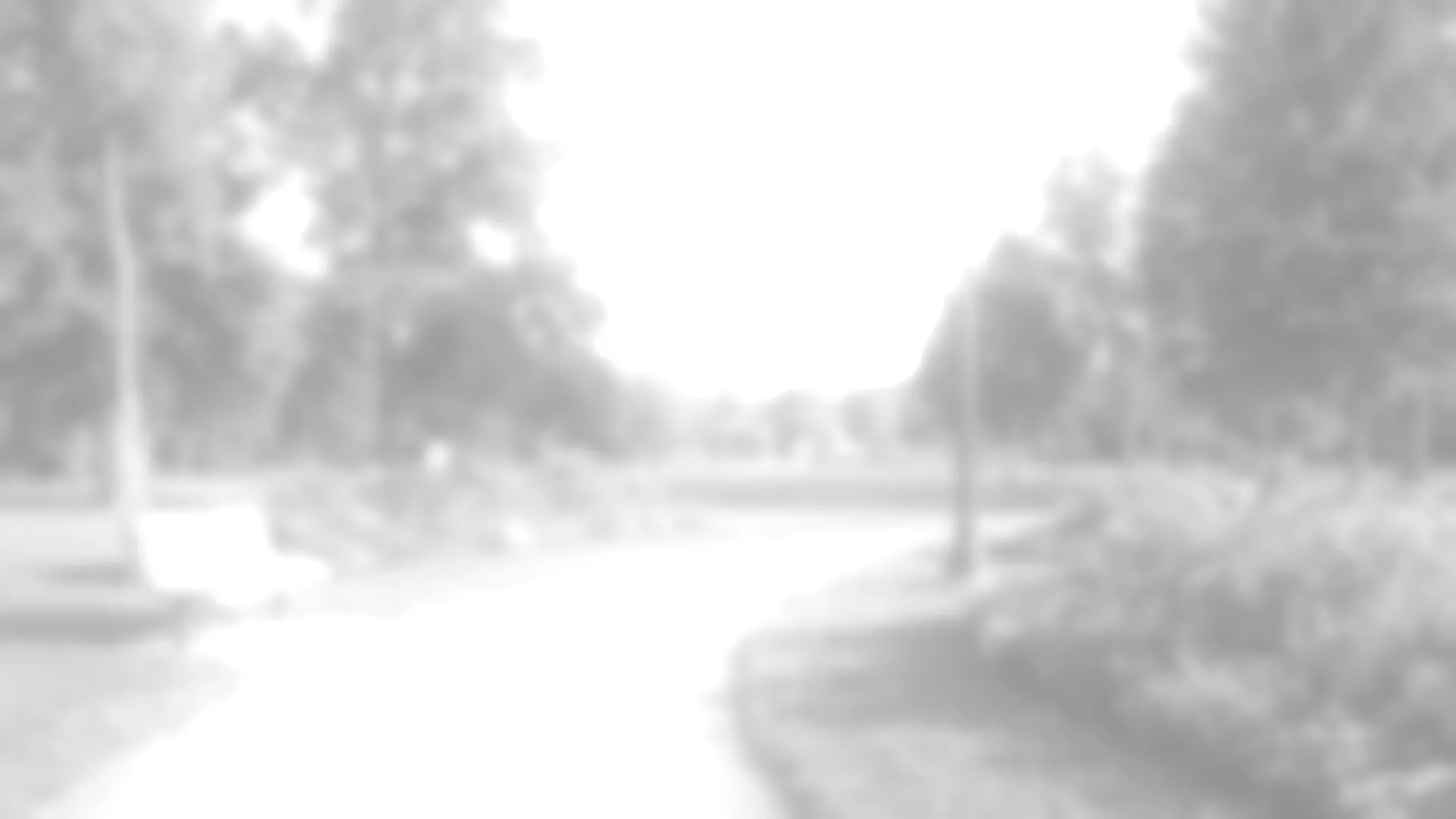
- In their wordsKnut Nordby, a vision scientist with complete achromatopsia, wrote that in bright light the scene is "quickly washed out, turned into a bright haze and all structured vision is lost", and that light sensitivity was more disabling to him than the lack of color.
- What "no color" means in practiceTry to describe the color of a thing to your child and you will be describing something she has never had.
See it, view by view
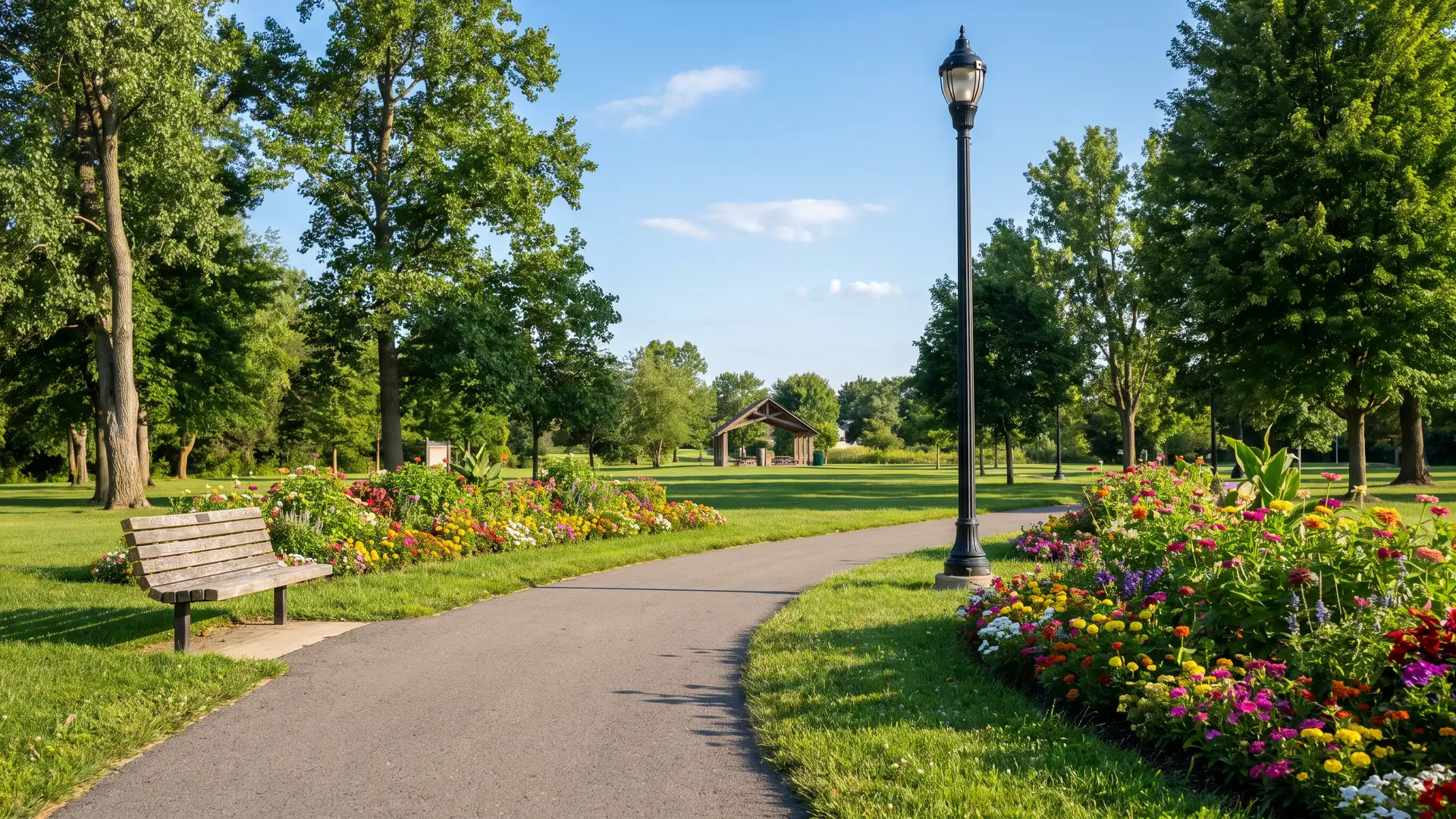
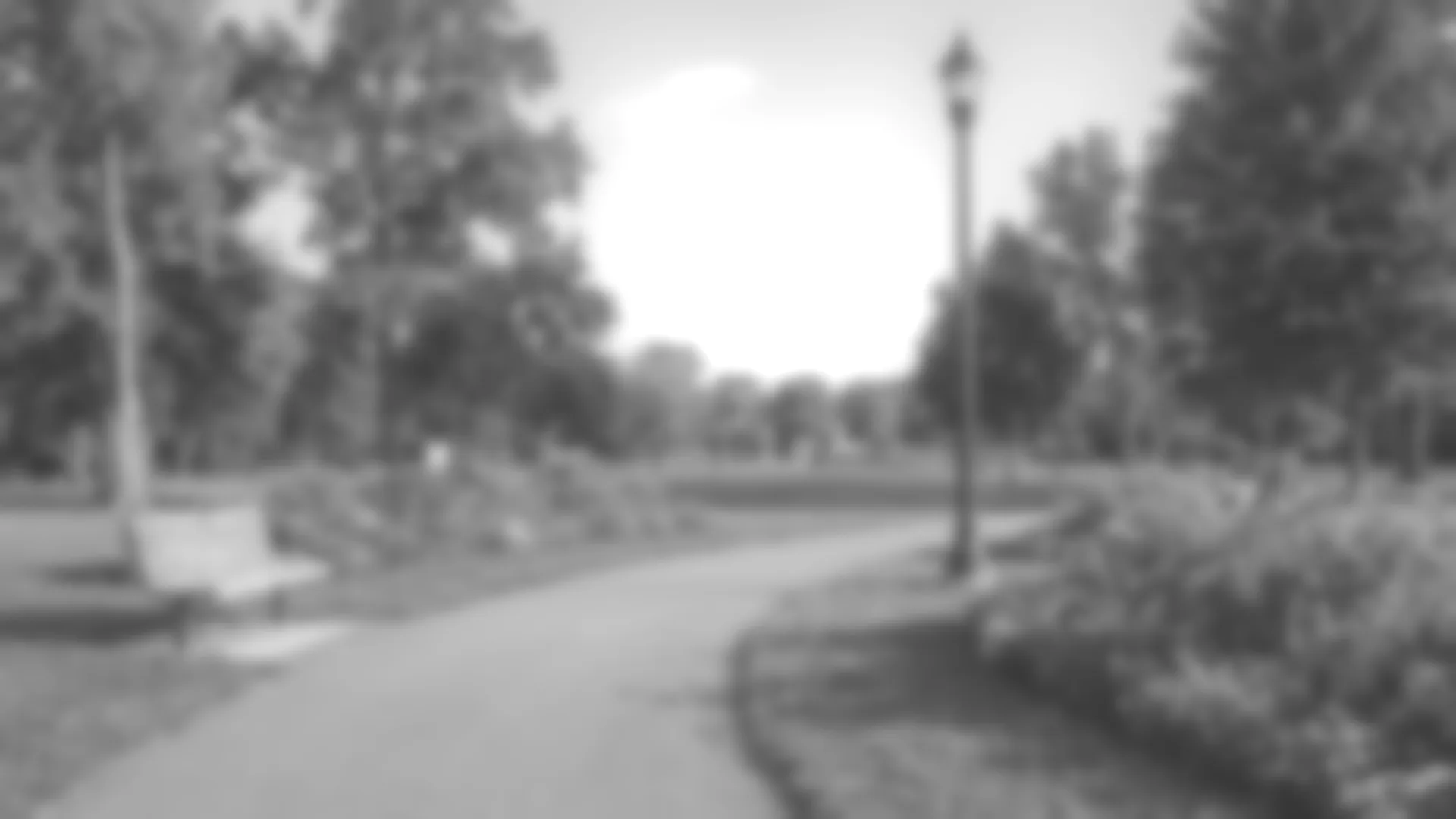
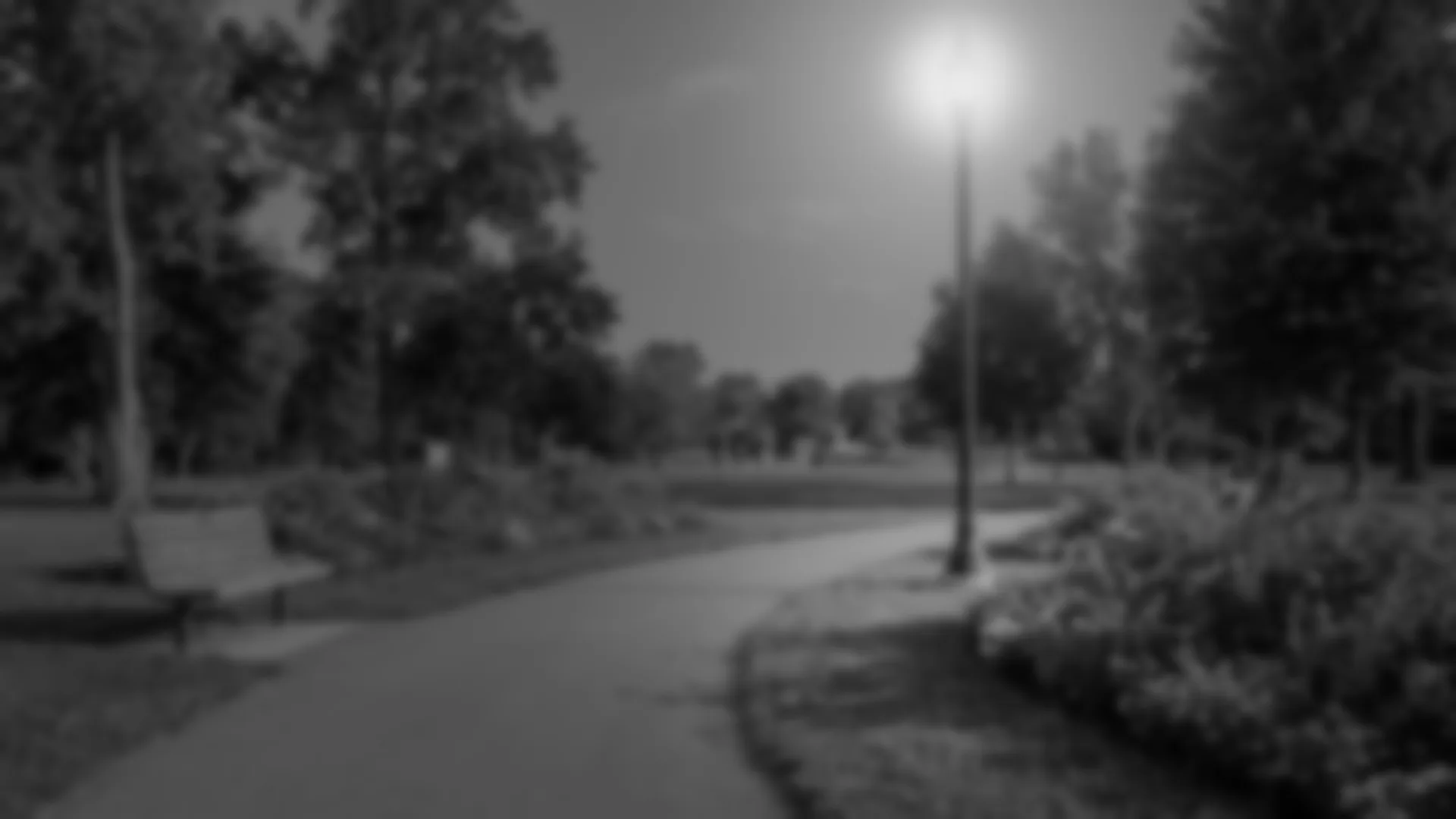
The left view never changes. The right one is the same park as achromatopsia shows it, drawn from the research our simulator rests on. Pick a view; the caption tells you what each frame shows and what it cannot.
Bright sun
The washed-out haze of full sunlight that Nordby describes.
What the person is experiencing
In achromatopsia the cones, the retinal cells for color, detail and bright-light vision, do not work 1. In complete achromatopsia a person sees only black, white and shades of gray; in the incomplete form some color can be seen 1. Children have reduced sharpness of vision, nystagmus (involuntary eye movements) and strong sensitivity to light, and vision actually gets worse as light levels go up 2. Nystagmus is often the first sign, noticed in the first weeks of life 3. Achromatopsia does not progress and does not lead to blindness 2.
In their words
Knut Nordby, a vision scientist with complete achromatopsia, wrote that in bright light the scene is "quickly washed out, turned into a bright haze and all structured vision is lost", and that light sensitivity was more disabling to him than the lack of color 4. Frances Futterman, another writer with the condition, described needing to blink constantly outdoors and catching glimpses of the world only as her eyelids closed 4. In dim light the same people see comparatively well and comfortably, because the rods are doing the seeing 4.
That is the most useful mental picture for a parent: your child is seeing with the night-vision system all the time. It works beautifully at dusk and indoors. It was never built for a sunny day.
"Quickly washed out, turned into a bright haze and all structured vision is lost."
What "no color" means in practice
Try to describe the color of a thing to your child and you will be describing something she has never had. What she does have is brightness. Two colors that are equally bright look identical; a red apple and a green apple on the same table may be indistinguishable, while a dark blue shirt and a pale yellow one are easy to tell apart. The ability to detect differences varies a lot between children, so answer the question "what do colors look like?" honestly and expect it to come up 5.
What our simulation shows
Nystagmus is a movement, so a still image can only hint at it; the smear is a convention, not a literal picture 6.
Signs you might notice in a child
- Rapid side-to-side eye movements in the first weeks of life 3 7.
- Screwing up the eyes, turning away from windows, shielding the face, or crying in bright sunlight; calm in shade and in the evening 2.
- Eyes that do not react normally to a bright light being turned on in the room 7.
- Holding things close and difficulty with detail at school 5.
- Inability to sort or name colors, in a child who is otherwise developing normally 1.
Common questions
Will it get worse?
No. Achromatopsia is stable and does not lead to blindness 2.
Why are glasses not enough?
Glasses fix focus; this is a retina problem. Children should still be checked for farsightedness, which can be corrected 3, but the main aid is tint, not power.
What helps right now?
Is there a treatment?
Not yet approved. A genetic diagnosis is typically required to be considered for clinical research trials, so testing is worthwhile 3.
Go deeper
- The achromatopsia profileGenes, inheritance, what to expect, and what is in trials.
- For the clinician in the familyNot yet live. The clinician page for this condition is still in review.
- What the other conditions look like
- What does night blindness look like?
- What does retinitis pigmentosa look like?
- What does Stargardt disease look like?
- What does choroideremia look like?
- What does cone dystrophy look like?
- What does Best disease look like?
- What does Usher syndrome look like?
- What does Leber congenital amaurosis look like?
- What does vision loss look like in Bardet-Biedl syndrome?
- Children and familiesSchool, services and support, with early warning signs by age.
References
Sources were read on Oct 22-23, 2026.
- 1.MedlinePlus Genetics, U.S. National Library of Medicine. Achromatopsia. https://medlineplus.gov/genetics/condition/achromatopsia/
- 2.Retina UK. Achromatopsia. https://retinauk.org.uk/information-and-support/about-inherited-sight-loss/types-of-inherited-sight-loss/achromatopsia/
- 3.American Academy of Ophthalmology, EyeWiki. Achromatopsia. https://eyewiki.org/Achromatopsia
- 4.Achromatopsia.info. Debilitating glare (quoting Nordby K, Vision in a complete achromat: a personal account; and Futterman F, Understanding and Coping with Achromatopsia). http://www.achromatopsia.info/debilitating-glare/
- 5.Moorfields Eye Hospital NHS Foundation Trust. Paediatric low vision assessment: achromatopsia. https://www.moorfields.nhs.uk/children-and-young-people/paediatric-low-vision-assessment/lva-achromatopsia
- 6.A Race Against Blindness. How our vision simulations were built: research basis and rendering conventions (Education Hub, Oct 2026). https://araceagainstblindness.org/education/vision-simulations/methodology
- 7.Raising Children Network (Australia). Low vision and blindness: babies, children and teenagers. https://raisingchildren.net.au/disability/guide-to-disabilities/assessment-diagnosis/low-vision-blindness-babies-children-teens
About this page
This page is an additional resource for the community. It is not a substitute for advice from your own eye care team, or for medical journals, textbooks or clinical training. We have done our best to provide accurate and up-to-date information, and the references are listed above, but inaccuracies and omissions may exist. Confirm any medical information with your eye care team or against primary-source medical education resources before relying on it. The simulation frames are approximations built from the cited literature, not a prediction of anyone's vision.