
What does cone dystrophy look like?
Why bright days are the hard days. In the words of people who live with it, with the frames from our simulator and the sources behind every statement.

The short answer
A child with cone dystrophy sees a world that is slightly out of focus everywhere, with colors faded and bright light turning into glare. It is not a hole in the middle like Stargardt disease and not a tunnel like RP; it is the whole picture losing sharpness and color, worst in sunlight and best in the evening. Night vision is usually fine. If your child squints in the playground and relaxes at dusk, that is the condition, not a mood.
- What the person is experiencingCone dystrophy damages the cones, the retinal cells responsible for sharp central vision, color, and seeing in bright light.
- In their wordsHannah, who was born with cone dystrophy, describes her baseline: "I've never had perfect vision.
- Why sunlight is the enemy and dusk is a reliefCones are the cells that work in bright light; rods take over in dim light.
See it, stage by stage
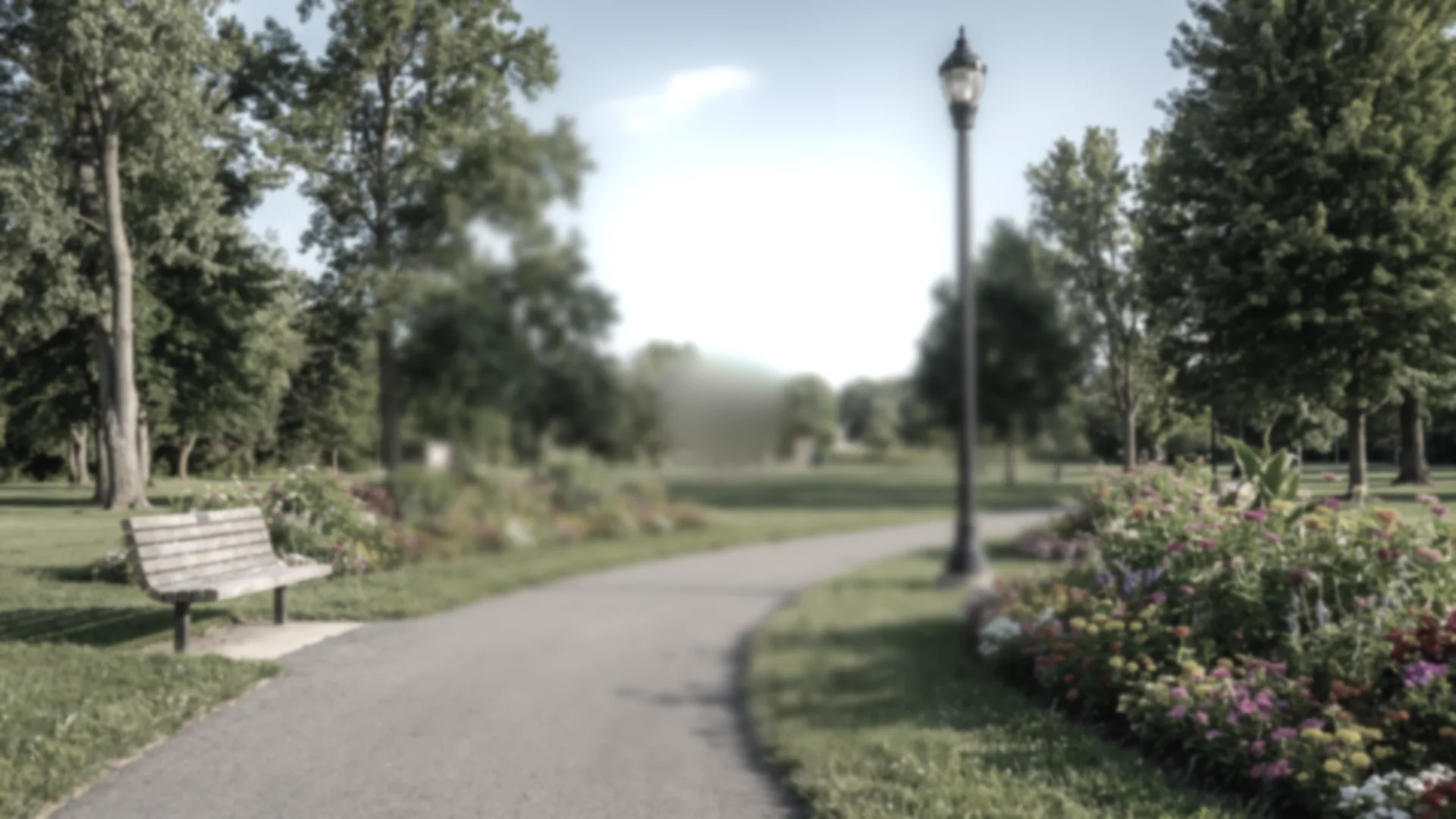
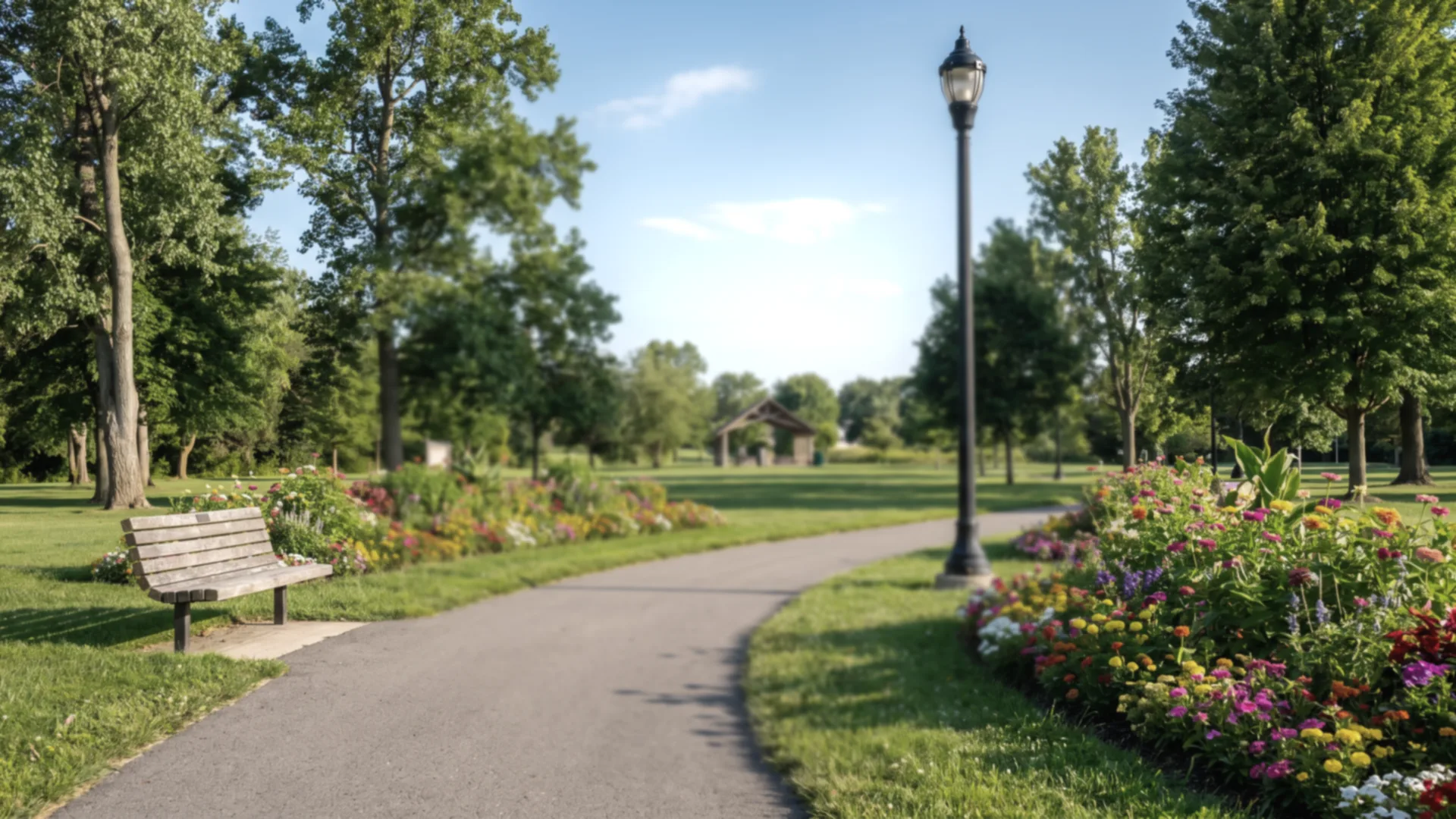
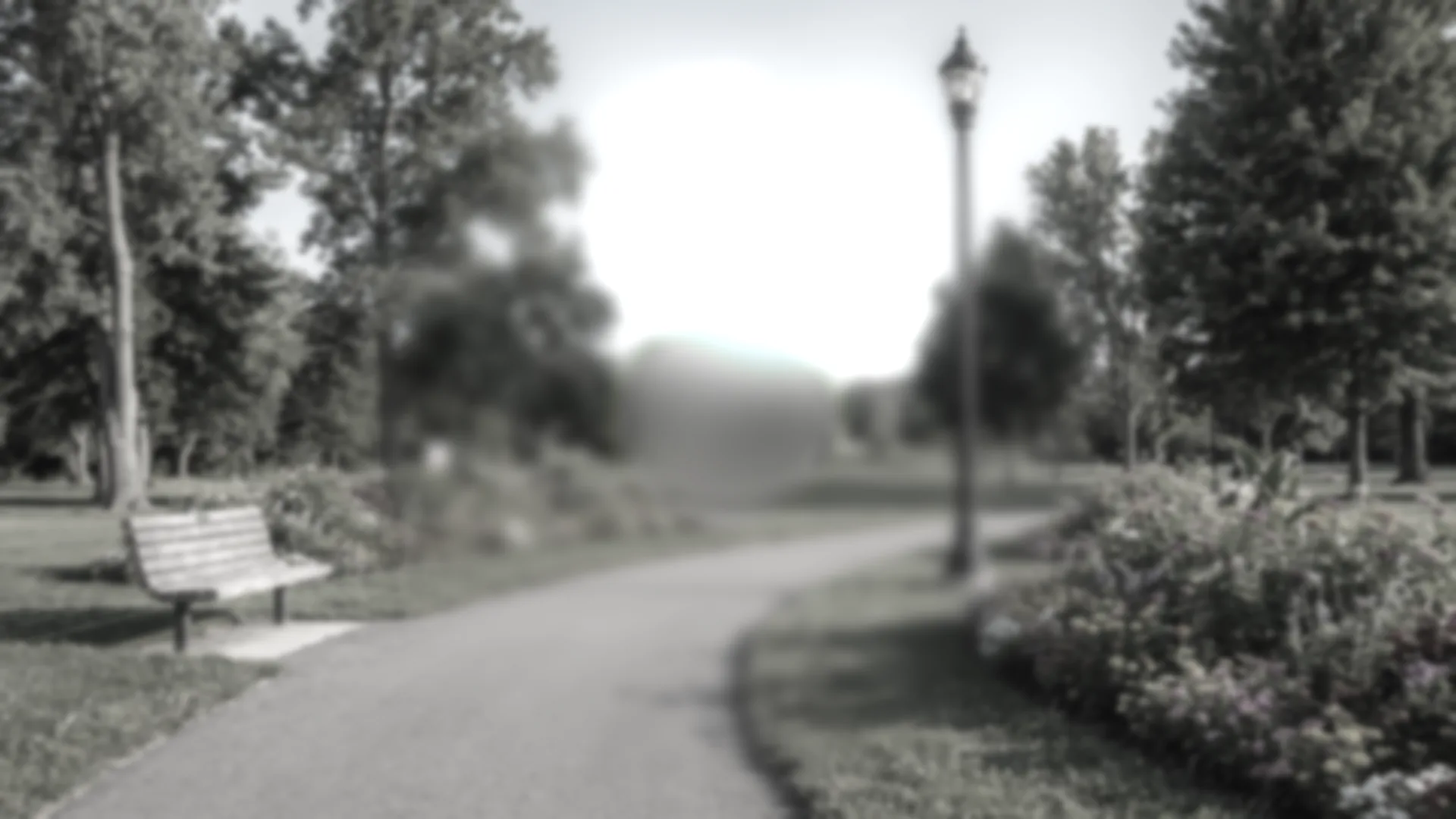
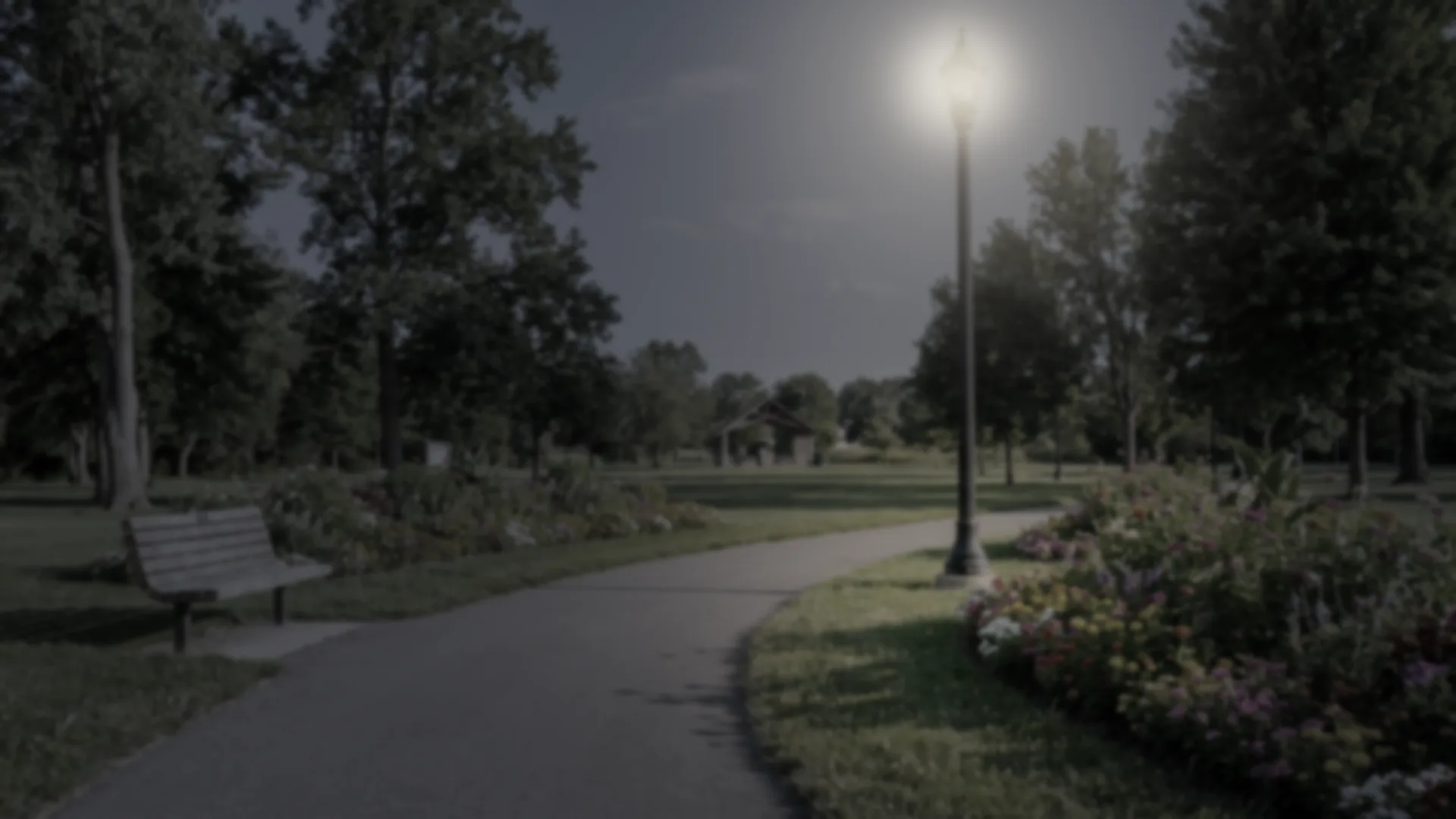
The left view never changes. The right one is the same park as cone dystrophy shows it, drawn from the research our simulator rests on. Pick a stage; the caption tells you what each frame shows and what it cannot.
Mid
The park at about 20/200 sharpness with strong color loss and glare around the sky and lamp.
Watch cone dystrophy progress
What the person is experiencing
Cone dystrophy damages the cones, the retinal cells responsible for sharp central vision, color, and seeing in bright light 1. The three classic complaints are loss of fine detail, trouble telling colors apart, and discomfort in bright light 2. Both eyes are affected in the same way 2. Side vision is usually unaffected, and most people see well at night because the rods are spared 1. Symptoms usually begin in childhood up to early adulthood, and the blur cannot be fully corrected with glasses 3. Some children develop nystagmus, a wobble of the eyes, or find their eyes drift 2.
There is a stationary form, present from infancy and roughly stable, and a progressive form that usually begins in late childhood or early adulthood and worsens over time 1. In the progressive form vision can decline to legal blindness, 20/200 or worse, although complete blindness is uncommon 1. Some people lose color vision altogether 1. In the related cone-rod dystrophies the rods are also affected, bringing night blindness and side-vision loss on top 3.
In their words
Hannah, who was born with cone dystrophy, describes her baseline: "I've never had perfect vision. I don't know what 20/20 is like, but I was like right past the cusp of legally blind" 4. She was told she was born with 80% of her cones missing, and her doctors "were shocked that I had color perception... I actually wasn't colorblind. I'm colorblind now" 4. Her glasses prescription has not changed since she was four 4; the blur of cone dystrophy cannot be fully corrected with glasses 3.
Hannah's story also shows how a cone-rod dystrophy can later take the sides. In her early twenties "it started coming in like blind spots... I had blind spots all over the place. And then just slowly it's kind of gone" 4. She describes not noticing the loss while at home, then realizing it when she went back out into the world: "oh my God, I can't, I can't see so much" 4. And she describes the brain's cover-up: "your brain does a really great thing where it like makes up everything you can't see" 4.
"I've never had perfect vision. I don't know what 20/20 is like, but I was like right past the cusp of legally blind."
Why sunlight is the enemy and dusk is a relief
Cones are the cells that work in bright light; rods take over in dim light 5. When cones are failing, bright light gives the child the worst of both: the cones cannot resolve detail, and the remaining signal is swamped by glare. In dim light the healthy rods do the seeing, so the picture is steadier and more comfortable 1. This is why tinted lenses or dark sunglasses in bright places are the mainstay of comfort 1 3, and why your child may be happiest in the evening.
What our simulation shows
Because cone dystrophy is about the cones everywhere rather than a hole in the center, we render it as the whole scene losing sharpness and color, with bright areas blooming into glare.
Signs you might notice in a child
- Squinting, screwing up the eyes, or turning away from windows and bright skies; preferring shade 2 7.
- Holding things close and sitting near the board or screen, with glasses that do not seem to help 3 8.
- Mixing up colors, or naming them inconsistently 2.
- A visible wobble or drift of the eyes 2.
- Noticeably more confident outdoors in the evening than at midday 1.
Common questions
Go deeper
- The cone dystrophy profileGenes, inheritance, what to expect, and what is in trials.
- For the clinician in the familyNot yet live. The clinician page for this condition is still in review.
- What the other conditions look like
- What does night blindness look like?
- What does retinitis pigmentosa look like?
- What does Stargardt disease look like?
- What does choroideremia look like?
- What does achromatopsia look like?
- What does Best disease look like?
- What does Usher syndrome look like?
- What does Leber congenital amaurosis look like?
- What does vision loss look like in Bardet-Biedl syndrome?
- Children and familiesSchool, services and support, with early warning signs by age.
References
Sources were read on Oct 22-23, 2026.
- 1.National Organization for Rare Disorders (NORD). Cone Dystrophy. https://rarediseases.org/rare-diseases/cone-dystrophy/
- 2.Macular Society (UK). Cone dystrophy. https://www.macularsociety.org/macular-disease/macular-conditions/cone-dystrophy/
- 3.Gene Vision (UK). Cone/Cone-rod dystrophy: for patients. https://gene.vision/knowledge-base/cone-cone-rod-dystrophy-for-patients/
- 4.Pediatric Retinal Research Foundation. Living with Cone Dystrophy: Hannah's Therapeutic Humor (podcast transcript; first-person account). https://prrf.org/living-with-cone-dystrophy/
- 5.Royal National Institute of Blind People (RNIB). Retinitis pigmentosa and inherited retinal dystrophies. https://www.rnib.org.uk/your-eyes/eye-conditions-az/retinitis-pigmentosa/
- 6.A Race Against Blindness. How our vision simulations were built: research basis and rendering conventions (Education Hub, Oct 2026). https://araceagainstblindness.org/education/vision-simulations/methodology
- 7.A Race Against Blindness. Children and Families Guide: Early Warning Signs by Age. https://araceagainstblindness.org/education/children-and-families
- 8.Raising Children Network (Australia). Low vision and blindness: babies, children and teenagers. https://raisingchildren.net.au/disability/guide-to-disabilities/assessment-diagnosis/low-vision-blindness-babies-children-teens
About this page
This page is an additional resource for the community. It is not a substitute for advice from your own eye care team, or for medical journals, textbooks or clinical training. We have done our best to provide accurate and up-to-date information, and the references are listed above, but inaccuracies and omissions may exist. Confirm any medical information with your eye care team or against primary-source medical education resources before relying on it. The simulation frames are approximations built from the cited literature, not a prediction of anyone's vision.