
What does Usher syndrome look like?
Losing side vision when you already rely on your eyes to hear. In the words of people who live with it, with the frames from our simulator and the sources behind every statement.

The short answer
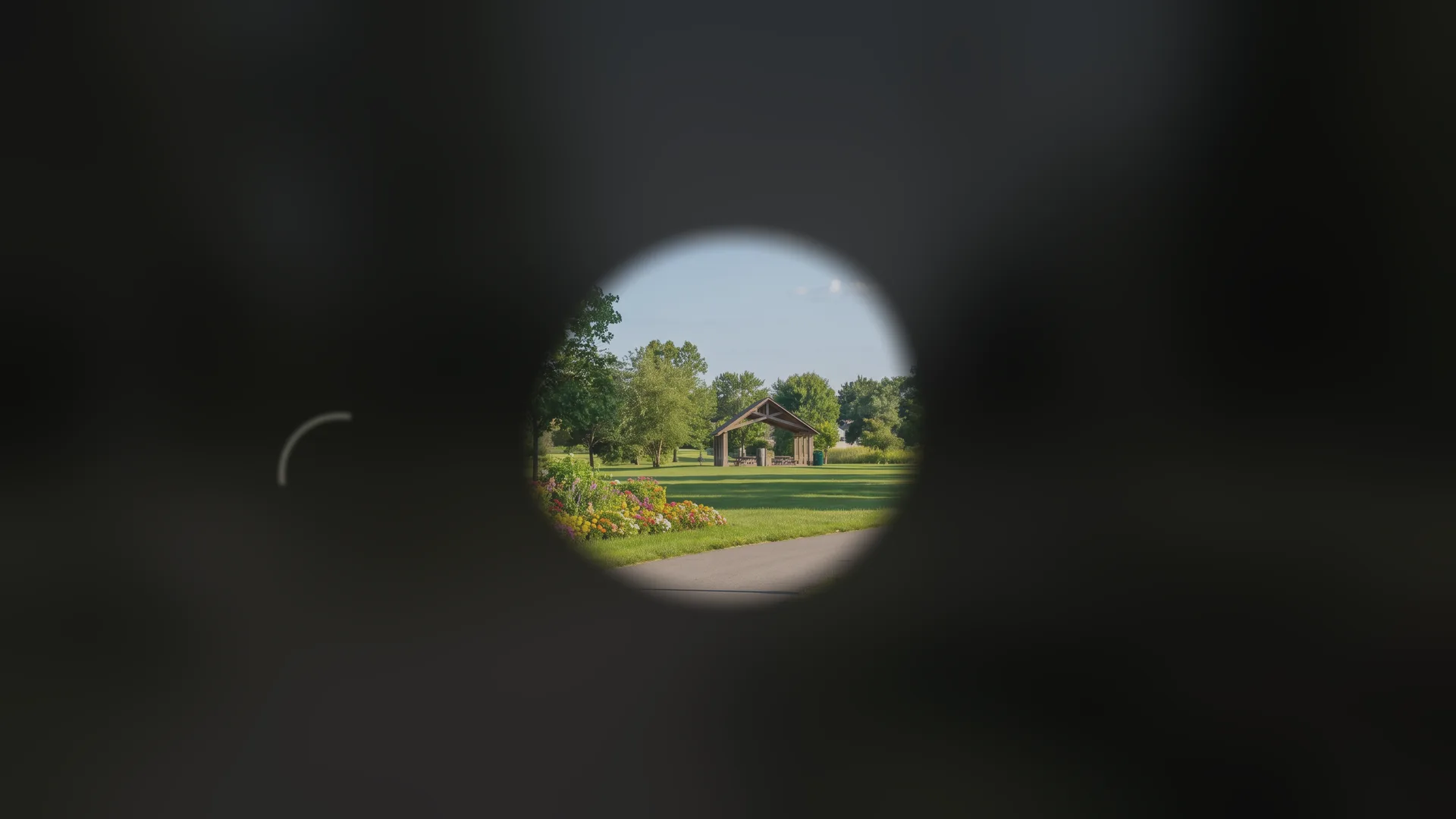
The eye part of Usher syndrome is retinitis pigmentosa, so what your child sees follows the RP pattern: the dark goes first, then the sides, slowly, and the lost areas are absence rather than black. What makes Usher different is that your child is already using vision to do the work of hearing. A shrinking field means the signing hands, the speaker's lips and the ground in front all compete for the same small window. People with Usher syndrome describe this constant juggling better than any clinician can.
- What the person is experiencingUsher syndrome combines childhood-onset hearing loss with progressive vision loss from RP, and sometimes balance problems.
- In their wordsMaggie, who has Usher type 1 and a 10 to 15 degree field, describes a walk with a friend: "I need to lip-read to understand you, so I'm looking at your face.
- What this means for a child who signs or lip-readsSigning hands move at the edges of the field, exactly where RP takes vision first.
See it, stage by stage
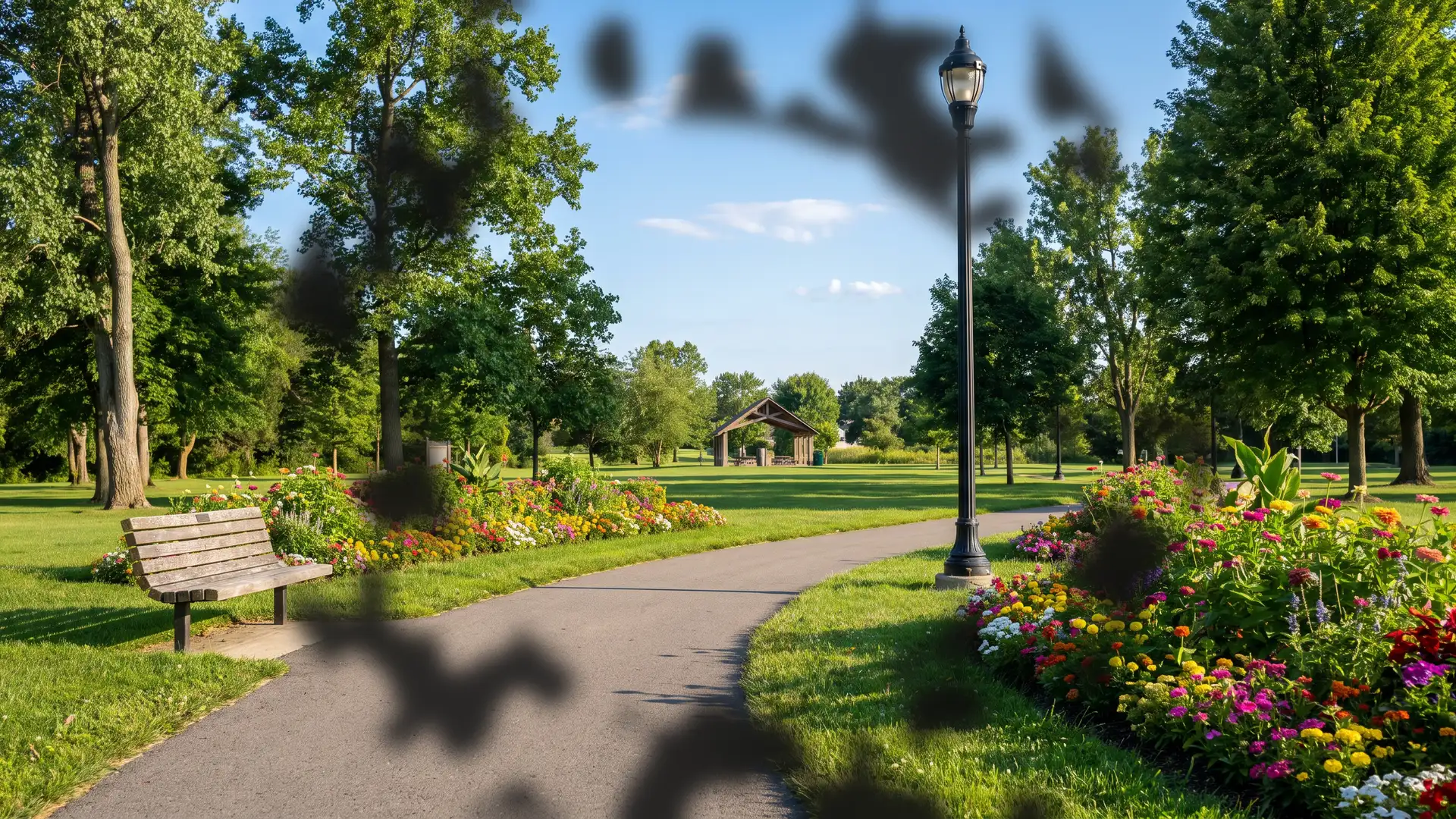
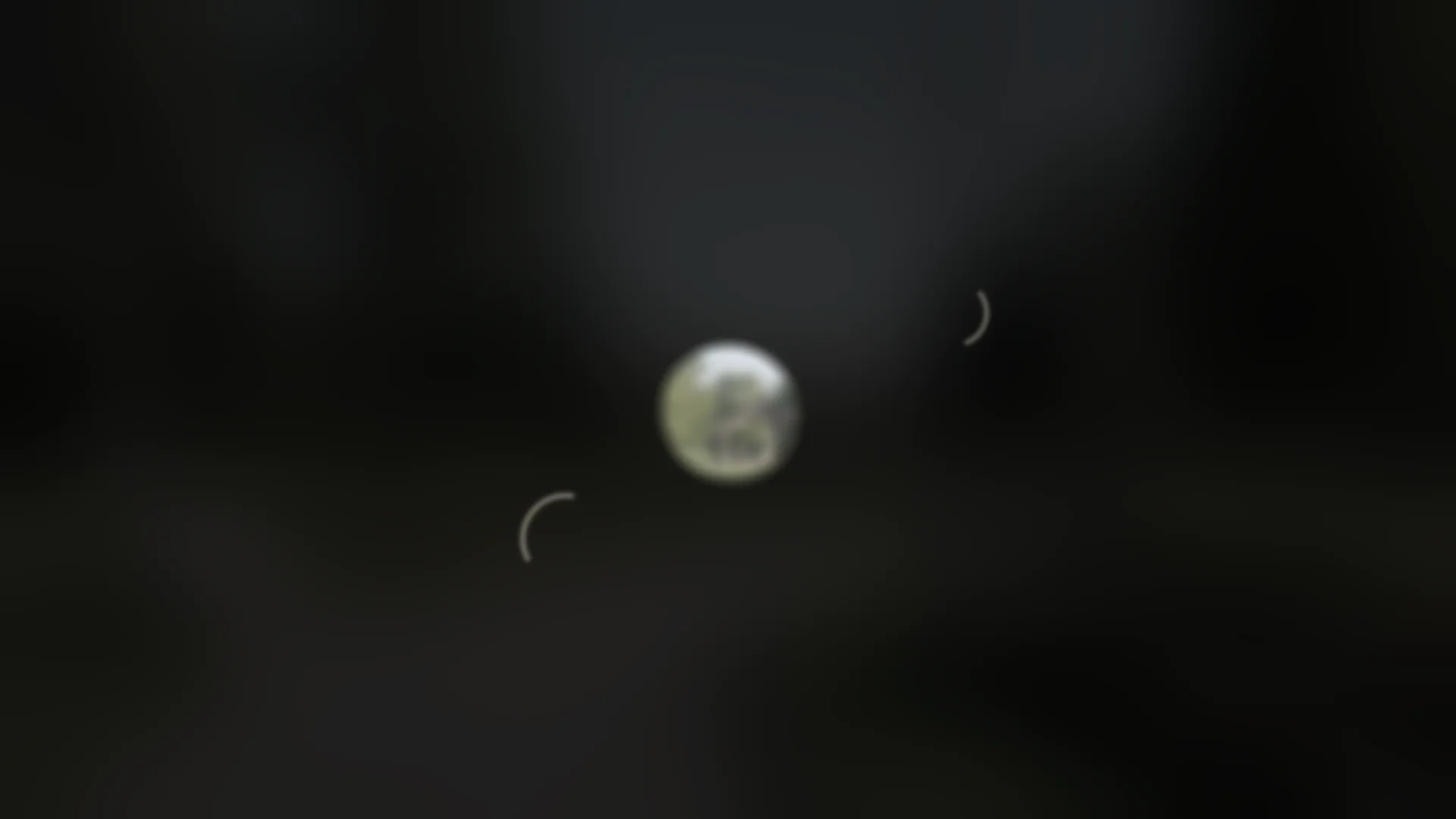
The left view never changes. The right one is the same park as Usher syndrome shows it, drawn from the research our simulator rests on. Pick a stage; the caption tells you what each frame shows and what it cannot.
What the person is experiencing
Usher syndrome combines childhood-onset hearing loss with progressive vision loss from RP, and sometimes balance problems 1. Sight loss follows the same pattern as RP: early symptoms are night blindness and reduced peripheral vision, with central vision loss later 1. In type 1, children are profoundly deaf from birth and the first signs of visual loss start in early childhood; in type 2 sight loss usually becomes apparent in the teenage years 1. People first notice difficulty in dim light and trouble adapting to dark places, then blind spots in side vision that cause them to bump into things; over time these enlarge and close in, "like seeing through a tunnel" 2. Later the center can become blurry and colors harder to tell apart 2.
In their words
Maggie, who has Usher type 1 and a 10 to 15 degree field, describes a walk with a friend: "I need to lip-read to understand you, so I'm looking at your face. But I have no peripheral vision, so I also need to look forward... and down... to avoid the bollards and pedestrians populating the city. Sometimes it feels like a game of dodgem cars" 3. With her balance also affected, she says, "My brain cannot process conversation and stability simultaneously. If I focus on staying upright, words slip away. If I try to listen, my steps falter" 3. Her summary: "I'm blind, but not blind. Deaf, but not deaf. Off-balance, but always trying to stay upright" 3.
Rebecca Alexander, who has Usher type 3, first noticed trouble at 12 when she could not see the blackboard, and describes night blindness and tripping "over the dogs who were below me if they were lying on the floor or coffee tables; my worst vision was right below me" 4. Her field is unusual: "I have this outermost periphery of my vision where I see my hands and then if I bring my hands in... I don't see them, I don't see them, I see them", which she calls donut vision, and which "requires a lot of scanning" 4. She started using a cane because "it provides a lot of information for me that my vision no longer can" 4.
Helene Lonborg-Moller, a physician with Usher type 2, charts her loss in ordinary events: a scooter accident when the streetlights went off, falls over a bicycle and a vacuum cleaner at home, not being able to find tools, leaving hospital work because of "difficulties reading the medical files of patients and problems navigating the corridors", and a fall into an unmarked hole that broke her ankle 5. Her doctors note that for many patients "traffic accidents in the dark, feeling not up to the skills of teenage peers when walking home from parties in the dark, misplacing items, falling over things" carry a heavy psychological weight and contribute to loneliness 5.
"I need to lip-read to understand you, so I'm looking at your face. But I have no peripheral vision, so I also need to look forward... and down... to avoid the bollards and pedestrians populating the city. Sometimes it feels like a game of dodgem cars."
What this means for a child who signs or lip-reads
Signing hands move at the edges of the field, exactly where RP takes vision first. A child with Usher may follow a conversation at arm's length and lose it when the signer stands close or gestures wide. Lip-reading needs the face in the clear central window, which leaves no window for the floor, as Maggie describes 3. In dim light both become harder at once, because the dark is the first thing to go 2. This is why families are often advised to introduce tactile communication and orientation skills early, before they are needed.
What our simulation shows
Our frames use the type 1 timeline, the childhood-onset form. Type 2 runs through the same pictures, starting roughly a decade later and usually more slowly 7.
Signs you might notice in a child
- In type 1, difficulty sitting up at about 6 months and not walking independently before 18 months, from the balance problem 2.
- Hesitation or fear at dusk, asking for lights, and reluctance to move around in the dark 8 9.
- Tripping over low things, bumping into objects on one side, missing thrown balls 4 2.
- Losing the thread of signed conversation in dim rooms or when the signer is close.
Common questions
Does he see black at the sides?
People with RP generally describe absence rather than black 10. See our RP article for a fuller answer.
When will it start?
In type 1, night blindness typically appears in the first decade; in type 2, difficulty in dim light is usually noticed in adolescence or early adulthood 7.
Go deeper
- The Usher syndrome profileGenes, inheritance, what to expect, and what is in trials.
- For the clinician in the familyNot yet live. The clinician page for this condition is still in review.
- What the other conditions look like
- What does night blindness look like?
- What does retinitis pigmentosa look like?
- What does Stargardt disease look like?
- What does choroideremia look like?
- What does cone dystrophy look like?
- What does achromatopsia look like?
- What does Best disease look like?
- What does Leber congenital amaurosis look like?
- What does vision loss look like in Bardet-Biedl syndrome?
- Children and familiesSchool, services and support, with early warning signs by age.
References
Sources were read on Oct 22-23, 2026.
- 1.Retina UK. Usher syndrome. https://retinauk.org.uk/information-and-support/about-inherited-sight-loss/types-of-inherited-sight-loss/usher-syndrome/
- 2.Gene Vision (UK). Usher syndrome: for patients. https://gene.vision/knowledge-base/usher-syndrome-for-patients/
- 3.UsherKids Australia. Usher Profile Spotlight: Maggie (first-person account, Usher syndrome type 1C). https://usherkidsaustralia.com/9380-2/
- 4.Usher Syndrome Coalition. Meet the Usher Community: Rebecca Alexander interview (Usher syndrome type 3). https://www.usher-syndrome.org/resources/living-with-usher-syndrome/meet-the-usher-community/rebecca-alexander-interview.html
- 5.Living with Usher Syndrome: Patient and Physician Perspectives (commentary co-authored by patient Helene Lonborg-Moller with ophthalmologists Yousif Subhi and Line Kessel). 2020. PMC7406578. https://pmc.ncbi.nlm.nih.gov/articles/PMC7406578/
- 6.A Race Against Blindness. How our vision simulations were built: research basis and rendering conventions (Education Hub, Oct 2026). https://araceagainstblindness.org/education/vision-simulations/methodology
- 7.D'Esposito F, Gagliano G, Gagliano C, Maniaci A, Avitabile A, Giglio R, et al. Usher syndrome: new insights into classification, genotype-phenotype correlation, and management. Genes (Basel). 2025;16(3):332. doi:10.3390/genes16030332 https://pmc.ncbi.nlm.nih.gov/articles/PMC11942519/
- 8.Hesperian Health Guides. Disabled Village Children: Causes of Loss of Vision. https://en.hesperian.org/hhg/Disabled_Village_Children:Causes_of_Blindness
- 9.A Race Against Blindness. Children and Families Guide: Early Warning Signs by Age. https://araceagainstblindness.org/education/children-and-families
- 10.Lawson Visconti L. Going blind in a sighted world (personal blog; first-person account of retinitis pigmentosa). http://lauralawsonvisconti.com/blog/rp
About this page
This page is an additional resource for the community. It is not a substitute for advice from your own eye care team, or for medical journals, textbooks or clinical training. We have done our best to provide accurate and up-to-date information, and the references are listed above, but inaccuracies and omissions may exist. Confirm any medical information with your eye care team or against primary-source medical education resources before relying on it. The simulation frames are approximations built from the cited literature, not a prediction of anyone's vision.